
MARTINIQUE – THE CARIBBEAN ISLAND OF FLOWERS

MARTINIQUE – THE CARIBBEAN ISLAND OF FLOWERS

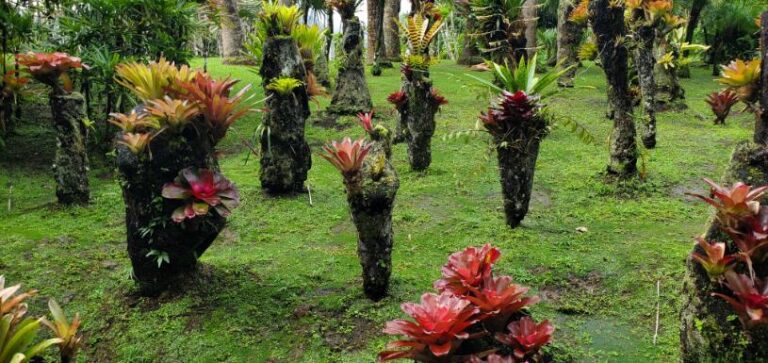
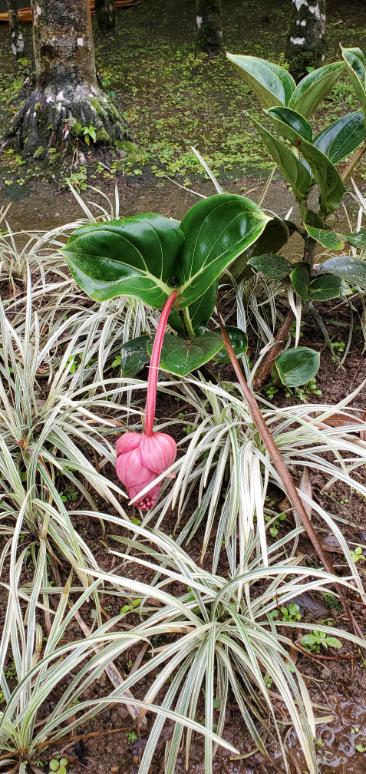
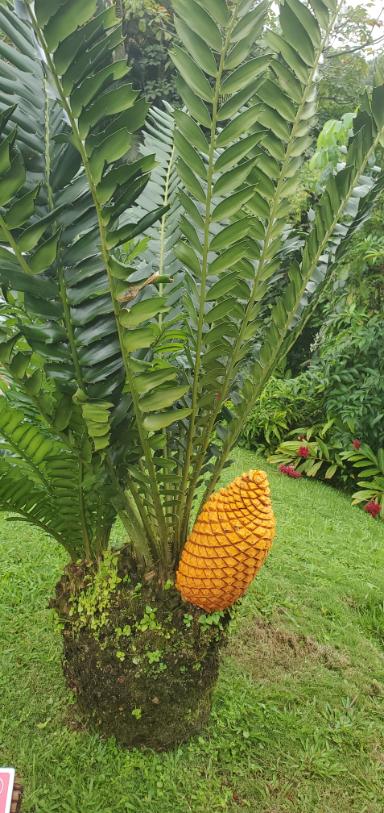
Martinique is a French Caribbean island in the Lesser Antilles. It is located precisely in the Windward Islands, between St Lucia and Dominica. Its capital is Fort-de-France, and it has a population of almost 350,000. Moreover, Martinique is known for its pristine beaches, volcanic landscapes, rich history, and its blend of French and Caribbean cultures. Martinique, the Caribbean Island of Flowers, is so named because  its rich volcanic soil and tropical rainfall, create the ideal condition for dense, lush, colourful, and diverse flora to thrive.

Furthermore, the island stands out as one of the Caribbean’s premier destinations because it offers the best of both worlds- modern amenities and pristine, unspoiled nature. Tourism is a primary part of its economy due to its beautiful beaches and natural scenery. In addition, other important industries include rum production, banana farming, sugar cane, and other agricultural products. Please continue reading to learn more about my visit to Martinique – the Caribbean Island of Flowers.

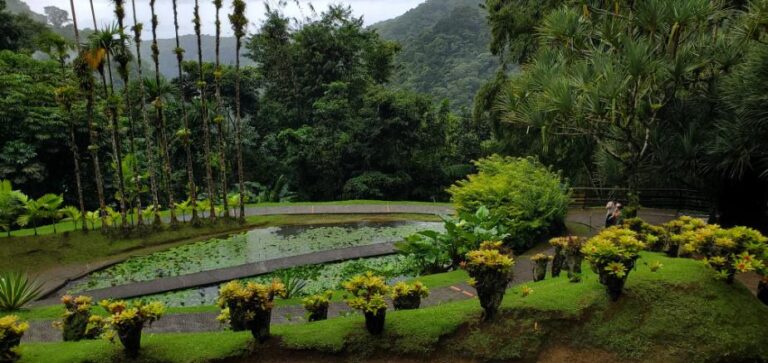
The beautiful flowers at the Balata Garden. Martinique, the Caribbean Island of Flowers
The beautiful flowers at the Balata Garden
The beautiful flowers at the Balata Garden. Martinique, the Caribbean Island of Flowers
The beautiful flowers at the Balata Garden
The beautiful flowers at the Balata Garden. Martinique, the Caribbean Island of Flowers
The beautiful flowers at the Balata Garden
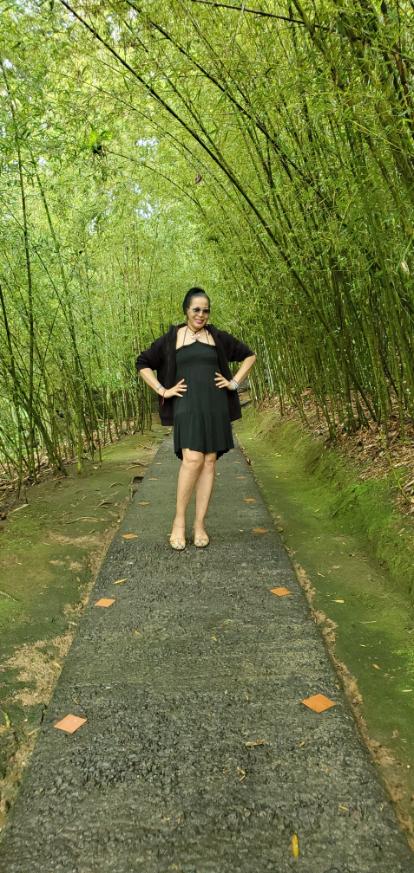
Enjoying the lush greenery at the Balalta Gardens
The beautiful flowers at the Balata Garden. Martinique, the Caribbean Island of Flowers
The beautiful flowers at the Balata Garden

Some of the links on this blog/website are affiliate links, and if you purchase products or services through these links a commission may or will be paid to the owner of this website.  The amount of commission varies from product to product.  All commission earned helps in the funding of this blog/website.

As an Amazon Associate, this site also earns from qualifying purchases.

ENTRY INTO MARTINIQUE

I entered Martinique by ferry. It is the coolest and most fun way to arrive, especially if you are visiting Guadeloupe, the butterfly-shaped isles of the Caribbean, due to its close proximity. The ferry takes about 4 hours and arrives at downtown Fort de France.

The procedure is similar to airport travel, as you must produce your passport and ticket on departure. Furthermore, to purchase the ferry ticket, whether at the office or online, you must provide your passport information.

On arrival in Fort-de-France, all passengers must collect their hand luggage and line up for the local immigration. The procedure was once again exactly the same as at the airport. However, before being questioned, I presented copies of hotel bookings, an exit ticket, along with my passport to the immigration officer (they appear to appreciate this, as it likely made their job easier). The officer reviewed the documents, asked how long I would be staying, stamped my passport and said, “Enjoy your stay.” After that, it was on to luggage pickup, Customs, and then a taxi.

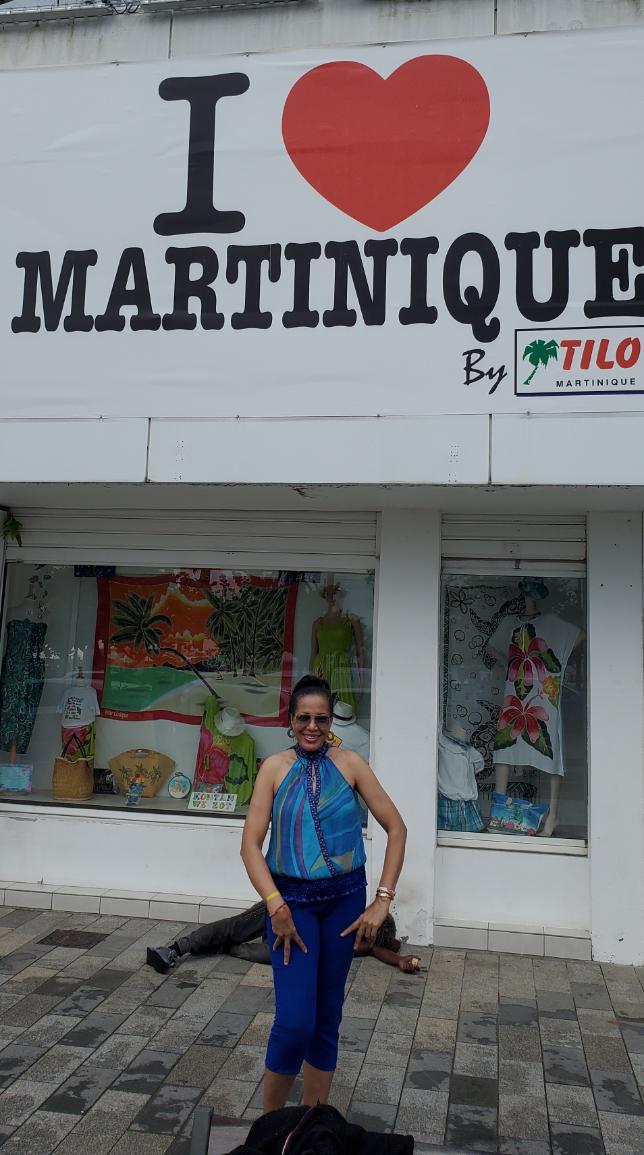
I truly love Martinique

Martinique - the Caribbean Island of Flowers Cont...

Learn how to Save, Plan, and Travel Alone on a Budget
A Travel Guide to Tips, Tricks, and Hacks for Better Travels

TRANSPORT OPTIONS TO/FROM THE CITY/AIRPORT

For those arriving/departing Martinique via air at the Aime Cesaire International Airport (FDF). Here are the main transport options to the city if you are not renting a car. The airport is about 12 km from Fort-de-France, the capital city. Transport information is as follows:

  • Private taxis take about 10 minutes and cost approximately €25.00–€35.00, depending on traffic and destination. However, fares increase by about 40% on weekends, public holidays, and at night.
  • Shuttle taxis typically accommodate 8–9 passengers and offer shared transfers. These take an average of 15–25 minutes and cost between €10.00 and €30.00.
  • Public buses (Line 26) are the cheapest option. The journey takes approximately 30–45 minutes and costs €1.50–€3.00, depending on the route.
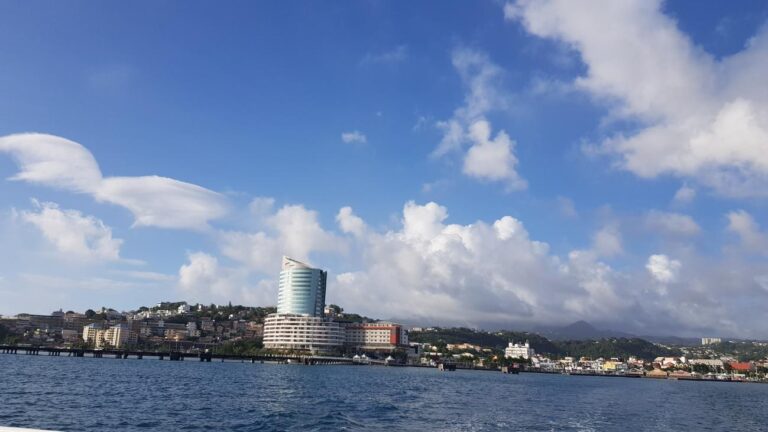
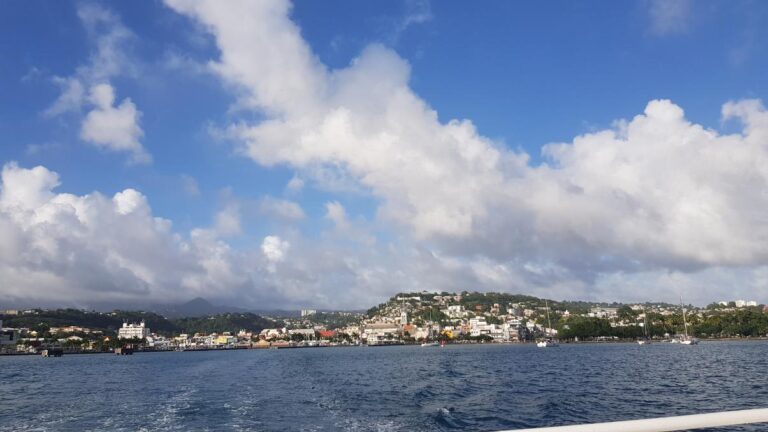
The view of Fort-de-France from the ferry to Anse Mitan. Martinique, the Caribbean Island of Flowers
The view of Fort-de-France from the ferry to Anse Mitan
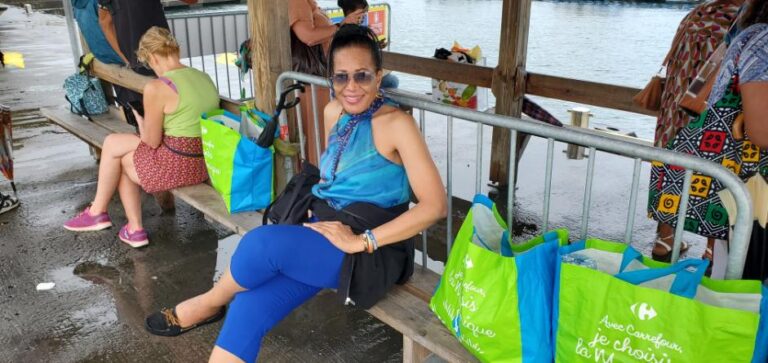
At the ferry port awaiting the water tax
he view of Fort-de-France from the ferry to Anse Mitan. Martinique, the Caribbean Island of Flowers
he view of Fort-de-France from the ferry to Anse Mitan
At the ferry port awaiting the water taxi

ABOUT THE CITY OF FORT-DE-FRANCE

Fort-de-France is the official capital and largest city in Martinique. It serves as its administrative and economic hub, replacing the former capital Saint-Pierre in 1681, after its volcanic destruction. Over the years, the city was renamed Fort-La-Republique, before finally becoming Fort-de-France in 1793.

The city has a lively and bustling atmosphere and is the center of cultural and social life of the island. It is known for its vibrant markets, architecture, and historical landmarks such as Fort St. Louis, making it a fascinating place to explore.

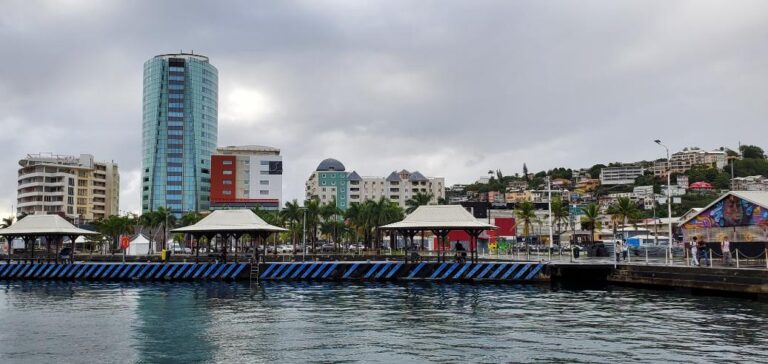
The Fort-de-France Skyline. Martinique, the Caribbean Island of Flowers
The Fort-de-France Skyline
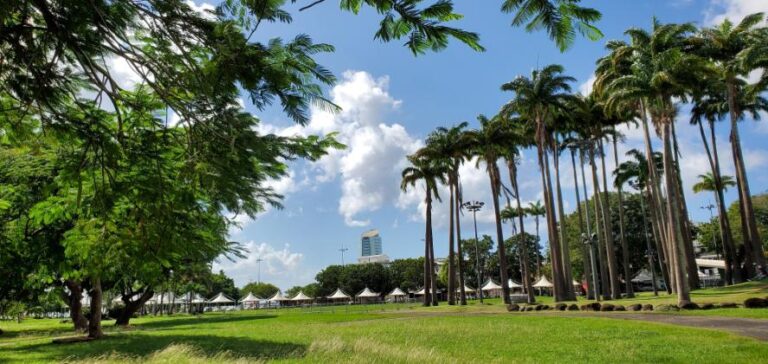
Beautiful green spaces and parks downtown Fort-de-France. Martinique, the Caribbean Island of Flowers
Beautiful green spaces and parks downtown Fort-de-France
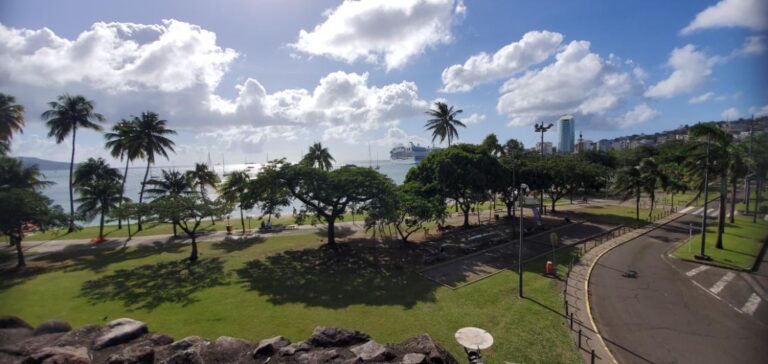
A view of the city's green spaces from Fort-St.-Louis. Martinique, the Caribbean Island of Flowers
A view of the city's green spaces from Fort-St.-Louis
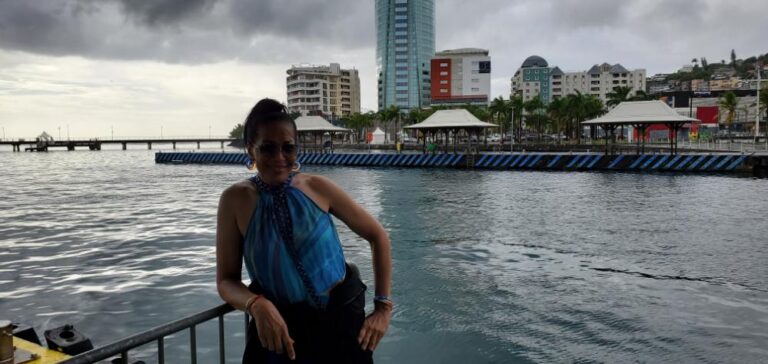
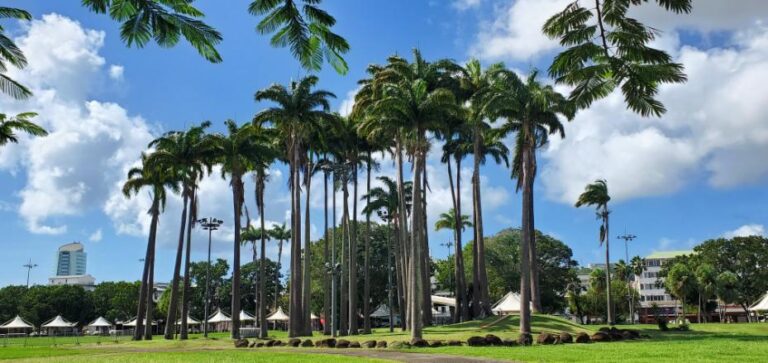
Enjoying Parc La Savane
Beautiful green spaces and parks downtown Fort-de-France. Martinique, the Caribbean Island of Flowers
Beautiful green spaces and parks downtown Fort-de-France
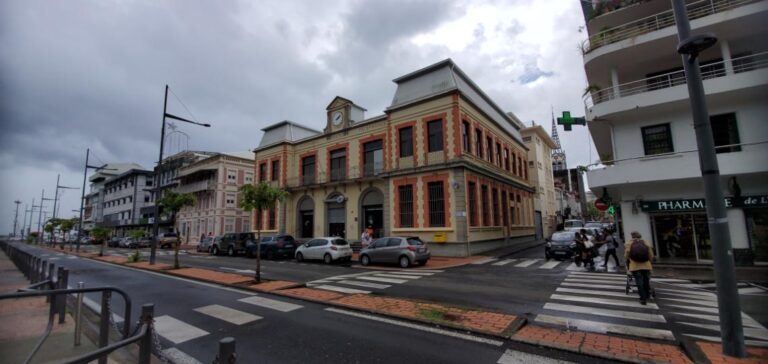
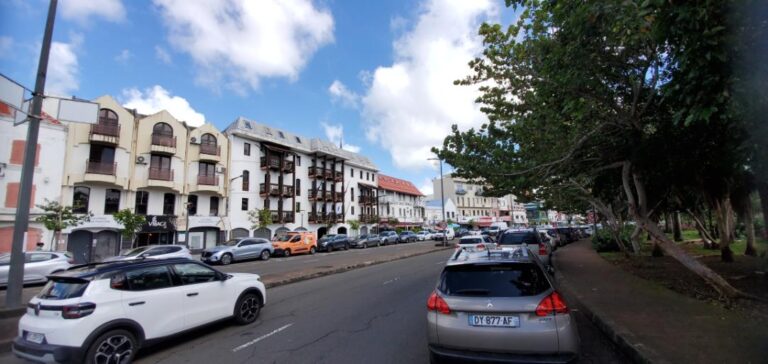
Buildings downtown Fort-de-France. Martinique, the Caribbean Island of Flowers
Buildings downtown Fort-de-France
Buildings downtown Fort-de-France. Martinique, the Caribbean Island of Flowers
Buildings downtown Fort-de-France
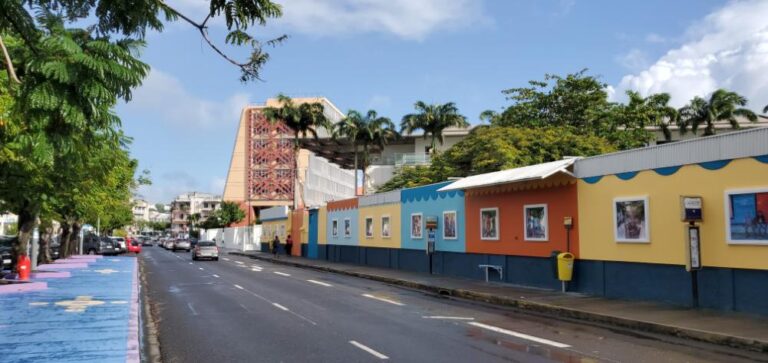
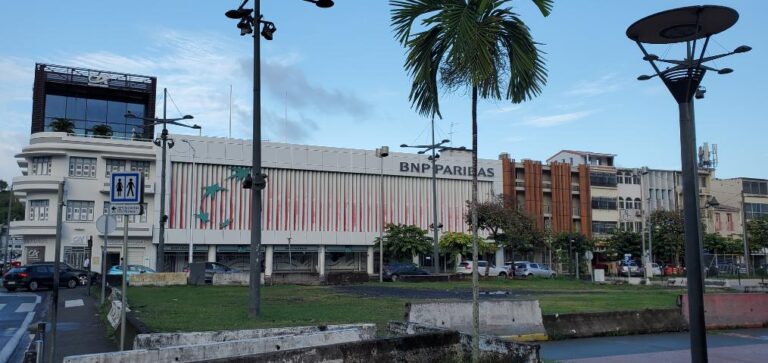
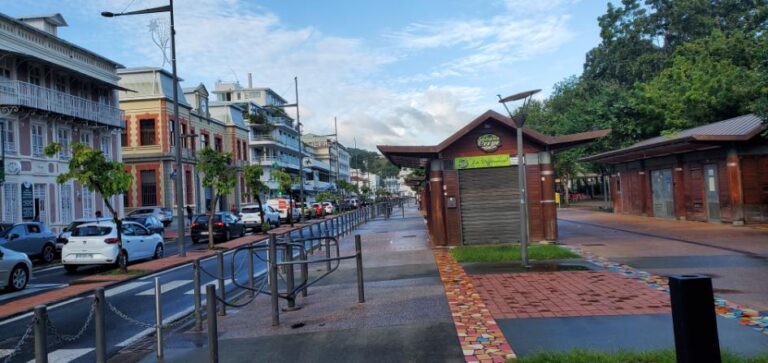
Downtown Fort-de-France. Martinique, the Caribbean Island of Flowers
Downtown Fort-de-France
Downtown Fort-de-France (. Martinique, the Caribbean Island of Flowers
Downtown Fort-de-France (
Buildings downtown Fort-de-France. Martinique, the Caribbean Island of Flowers
Buildings downtown Fort-de-France
Smart Watch (Answer/Make Calls), 1.85" Smart Watches for Men 110+Sport Modes Fitness Watch with Sleep Heart Rate Monitor, Pedometer, IP68 Waterproof Activity Trackers for iOS Android Smartwatch

Touchscreen Laptops

Martinique - the Caribbean Island of Flowers Cont...

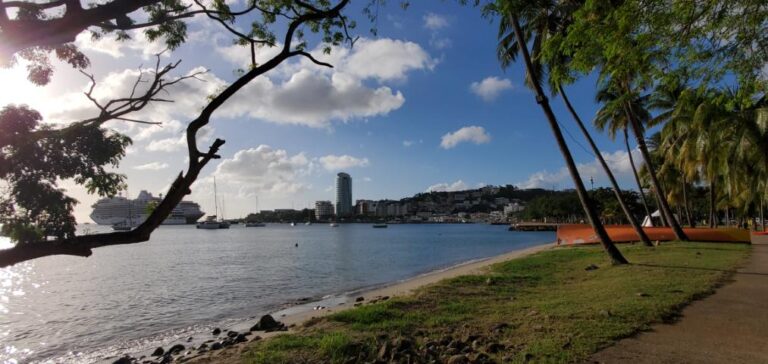
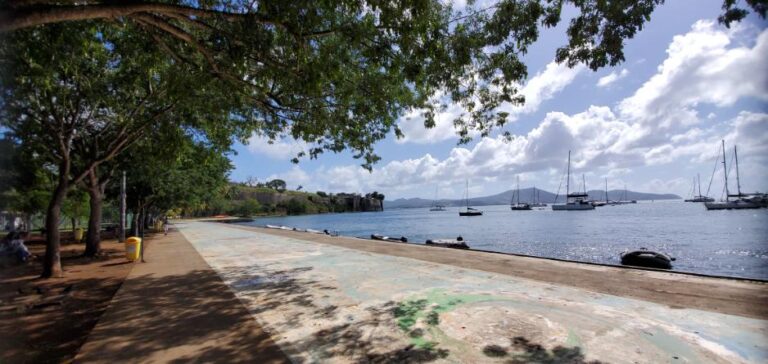
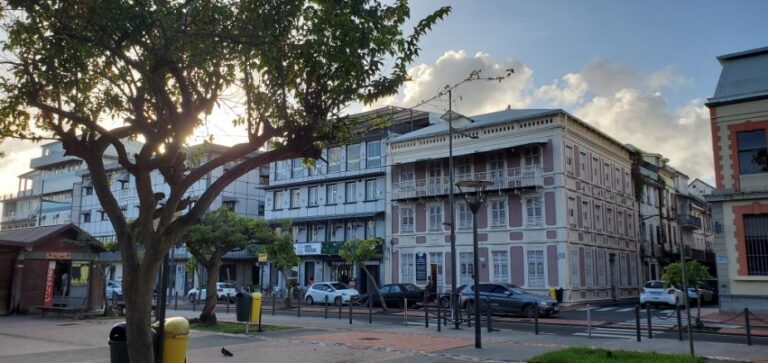
Although Fort-de-France is one of the larger cities in the Caribbean, is easy to navigate using buses and ferries. The city boasts an attractive waterfront, lovely parks and green spaces. It is a fairly clean city, though there are a few street dwellers. While the city has no large clubs, it offers nightlife in the form of bars, casinos, and restaurants. Further, for more traditional nightlife, visitors can head to areas like Pointe du Bout and St. Pierre.

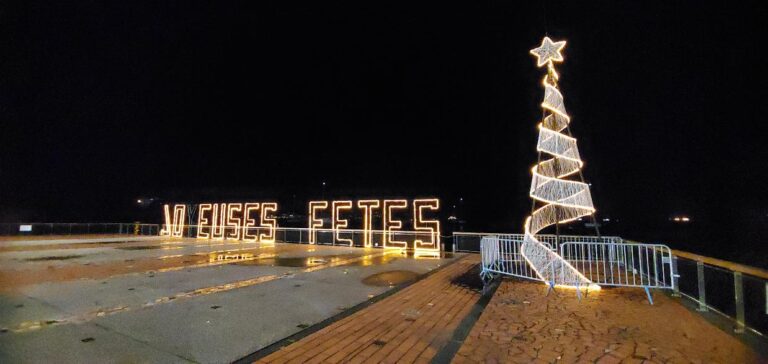
Moreover, the city was sparsely decorated for the yuletide season, and homes had almost none. The downtown atmosphere was generally not that of the upcoming Holiday season. Therefore, I personally did not find the spirit of Christmas present. It seemed that most people were about their business, and those I spoke to said they were not feeling the Christmas spirit.

Yuletide decorations at the t the waterfront. Martinique, the Caribbean Island of Flowers
Yuletide decorations at the t the waterfront
La Francaise public Beach. Martinique, the Caribbean Island of Flowers
La Francaise public Beach in the city
The Waterfront downtown Fort-de-France. Martinique, the Caribbean Island of Flowers
The Waterfront downtown Fort-de-France
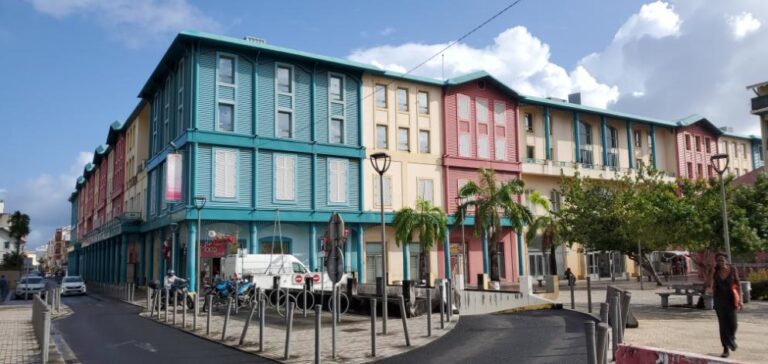
Colourful buildings downtown Fort-de-France. Martinique, the Caribbean Island of Flowers
Colourful buildings downtown Fort-de-France
Colourful buildings downtown Fort-de-FranceMartinique, the Caribbean Island of Flowers
Colourful buildings downtown Fort-de-France
Colourful buildings downtown Fort-de-France . Martinique, the Caribbean Island of Flowers
A view of the city's green spaces from Fort-St.-Louis. Martinique, the Caribbean Island of Flowers
A view of the city's green spaces from Fort-St.-Louis

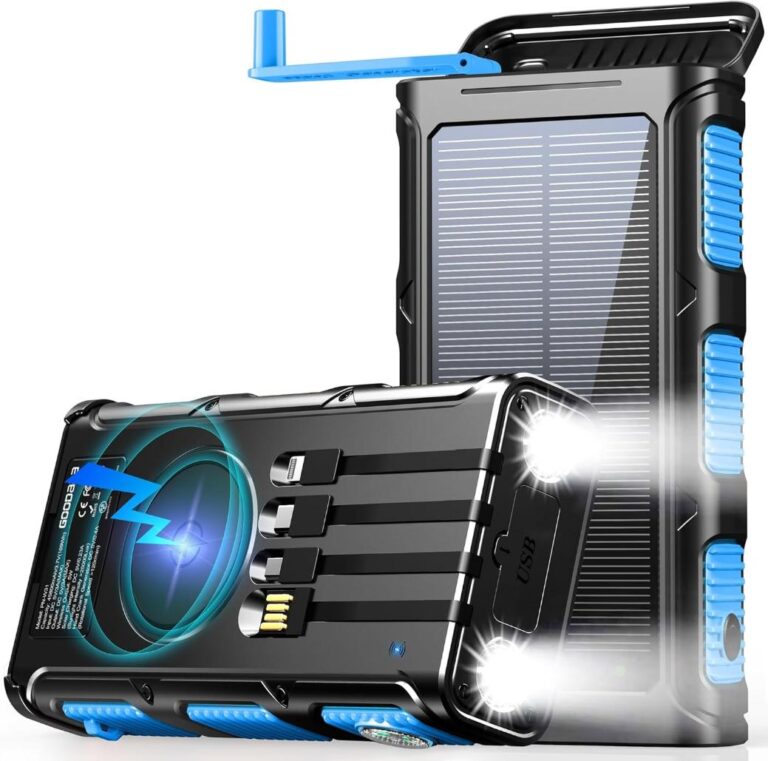
Prepare for Blackouts – GOODaaa Power Bank Wireless Charger 45800mAh Built in Hand Crank and 4 Cables 15W Fast Charging Power Bank 7 Outputs & 4 Inputs Solar Portable Charger, SOS/Strobe/Strong Flashlights, Compass

Prepare for Blackouts – Emergency Weather Radio NOAA/AM/FM with 4000mAh Portable Power Bank, USB/Solar/Hand Crank Charging, Flashlight, SOS Alarm, Radios for Outdoor & Indoor Hurricane, Camping Survival Essentials

OTHER IMPORTANT FUN FACTS & TIPS ABOUT MARTINIQUE

  • The languages spoken – French (official language), Creole is widely spoken, and English (limited).
  • Official currency – Euro
  • Martinique is part of France, so it uses the same European electrical outlets. Therefore, take along your appropriate electrical adapters for your phones, laptop, etc.
  • The Amerindian inhabitants, including the Caribs and Arawaks, first called Madinina or “Island of Flowers.” Martinique does not have a national flower, but two of its most widespread flowers are the Alpinina rouge (also known as red ginger) and the hibiscus.
  • Martinique industries include rum, sugar cane, avocados, vegetables, bananas, pineapples, and tourism. Additionally, it exports oil, rum, pineapples, and bananas.
  • The best time to visit Martinique is from December to April, when the weather is warm, dry, and has little rain. The rest of the year is usually hot, humid, and wet, and a possibility of hurricanes, especially between August and early October.
  • Martinique is a popular location for the film industry. Furthermore, they have facilitated the filming of scores of popular movies like; the 1973 James Bond movie “Live and Let Die” and “To Have and Have Not” (1989). The list is long with others like the (1989), “Sugar Cane Alley” (1983), “Thomas Crown Affair” (1999), “Fanon” (2024), among others.
  • The colonial town of Saint-Pierre, once the cultural capital of Martinique, was destroyed by the volcanic eruption of Monte Pelee. Besides, it was often referred to as the “Paris of the Caribbean” until 1902. Today it is a town of historical ruins and memorials that tells the story of its past glory to devastation.
  • Martinique’s entire land and sea territory has been a UNESCO Biosphere Reserve since 2021. Moreover, in September 2023, Mount Pelee’s volcano, forest, and peaks of northern Martinique, particularly Pitons du Carbet, were listed as UNESCO World Heritage Sites.
  • The first inhabitants of Martinique were the Arawaks, followed by the Caribs.
  • The Caribbean Region is a big rum tradition and production, with Puerto Rico as the leading rum capital. However, Martinique is also known as the rum capital of the world due to its numerous distilleries, and is home to 12 different types of rum. It is renowned for its exceptional rum, and it is among the best in the world due to its unique production process that follows the French guidelines.
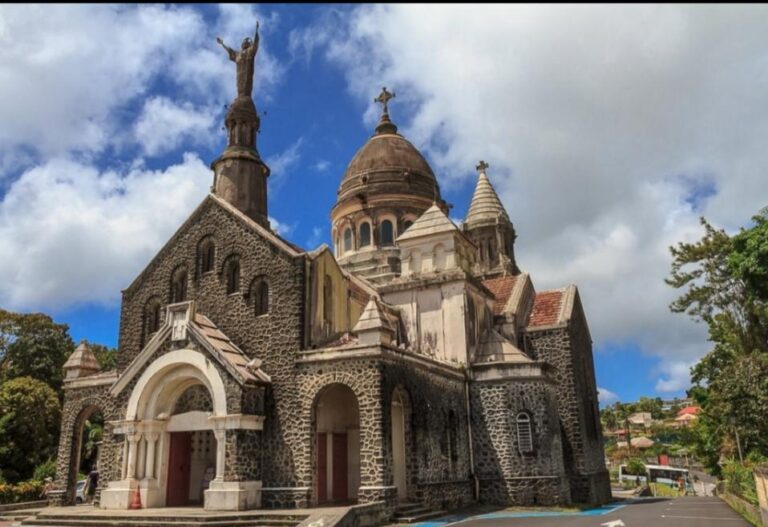
Paroisse De Balata. Martinique, the Caribbean Island of Flowers
Paroisse De Balata
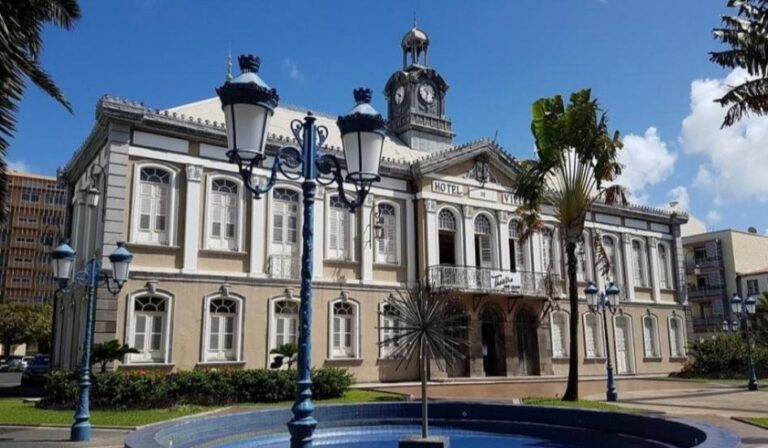
Theatre Aime Cesaire. Martinique, the Caribbean Island of Flowers
Theatre Aime Cesaire
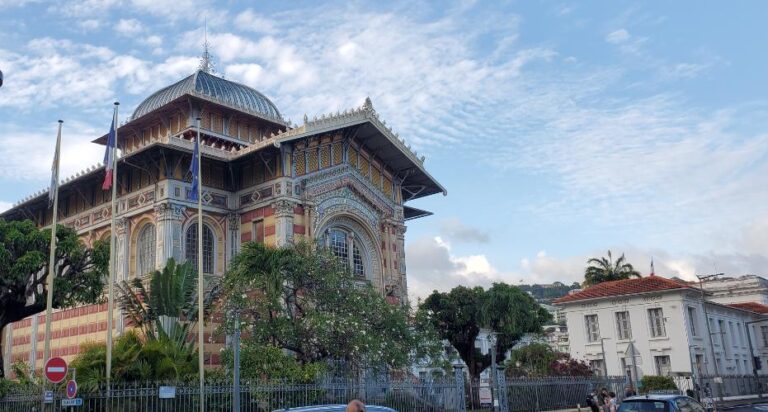
The Schoelcher library. Martinique, the Caribbean Island of Flowers
The Schoelcher library
Hamilton Beach Dual Breakfast Sandwich Maker with Egg Cooker Ring, Customize Ingredients, Perfect for English Muffins, Croissants, Mini Waffles


Tech Gadgets and Solutions to solve all problems 

  • Slavery was abolished in Martinique in 1848.
  • The island of Martinique is 425 square miles (50 miles long and 22 miles wide), which is just a little smaller than New York City.
  • Martinique is considered the birthplace of coffee cultivation in the New World. In 1723, a French naval officer named Gabriel de Clieu brought a single coffee seedling to the island. This seedling thrived, and became the parent of virtually all coffee trees in the Caribbean, Central and South America.
  • Many businesses in Martinique close at lunchtime and reopen later in the afternoon.
  • The dance style “Zouk” originated in Martinique.
  • Martinique has a higher standard of living than many other Caribbean countries.
  • On the northern side of Martinique, the beaches are black because of the presence of the Mount Pelee Volcano. However, on the southern side, the beaches are white sand.
  • Christopher Columbus “came across” the islands in 1493, but did not land there until 1502 on St. Martin’s day. The name Martinique came about through a possible mispronunciation of Madinina or after the name of the day he landed. However, it was previously known as “Jouanacaera” (the island of iguanas) by the Caribs and “Madinina” (Island of flowers) by the Taino. Nevertheless, it became a French colony in 1635 with the arrival of the French colonists, and the name Martinique became official.
  • Martinique’s flag is quite controversial as it is made of a white cross and four fer-de-lance vipers in each section.
  • The most dramatic feature of Martinique is Mount Pelee, the active volcano known for its eruption in 1902. It’s a popular spot for hiking and panoramic views of the island.
  • Martinique is part of the European Union (EU) as an outermost country and department of France, although it is in the Caribbean. Despite this, it is not in the Schengen zone, but it is subject to European laws and regulations.
  • Most restaurants close in the afternoon, so if you want a late lunch or early dinner, you might just have to cook. Or visit a beach or hotel restaurant that will cost you much more.
  • In the capital Fort-de-France, they drive on the right, and there are special lanes for buses and taxis. Therefore, if you are renting a vehicle, be mindful of this.
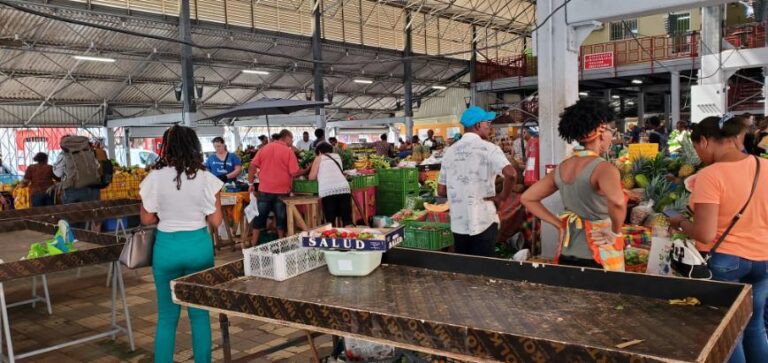
The Grand Marche (the everything market. Martinique, the Caribbean Island of Flowers
The Grand Marche (the everything market.
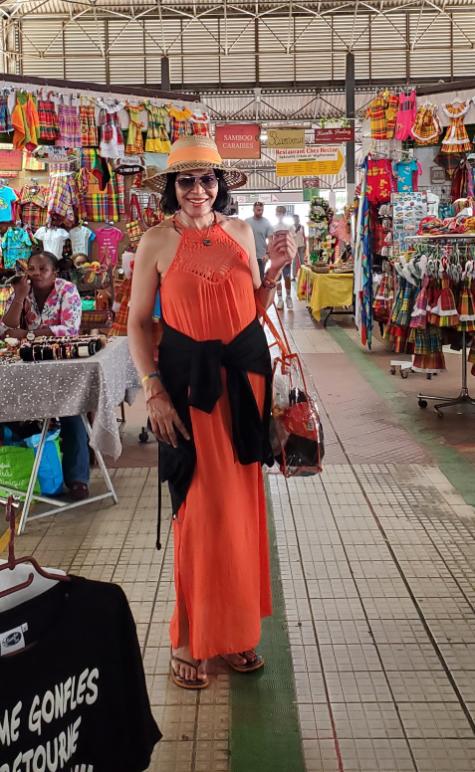
Shopping at the Grand Marche (the everything market)

ABOUT MARTINIQUE PEOPLE (Martiniquais)

Residents of Martinique are known as Martiniquais (French), Martinicans (English). The locals are generally very friendly and mannerly. It was rare to pass someone without them saying “Bonsoir/ bonjour Madam.” Especially when they entered a shop, store, or bus.

In general, the locals are helpful, hospitable, but also somewhat camera-shy. Notwithstanding, very few were reserved like the typical French, possibly due to discomfort with speaking or understanding a language other than their own. However, visitors who are polite and make an effort to learn a few French phrases will find the locals more receptive.

Overall, everyone I interacted with, including taxi drivers, hotel staff, shopkeepers and the “man on the street,” were truly helpful, kind and welcoming.

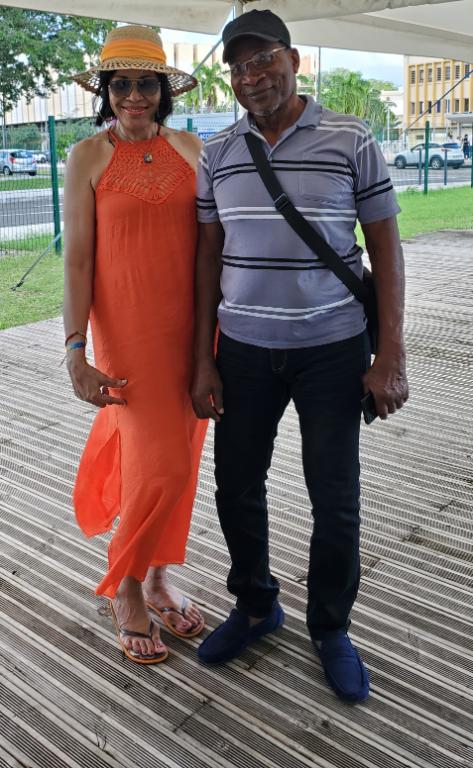
CoraDexpllrer and one of the locals Martinican
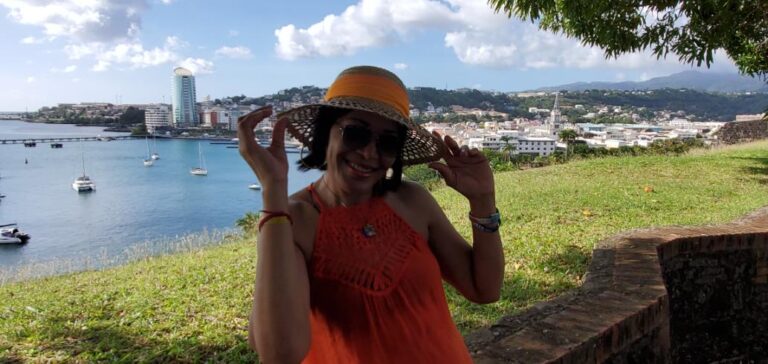
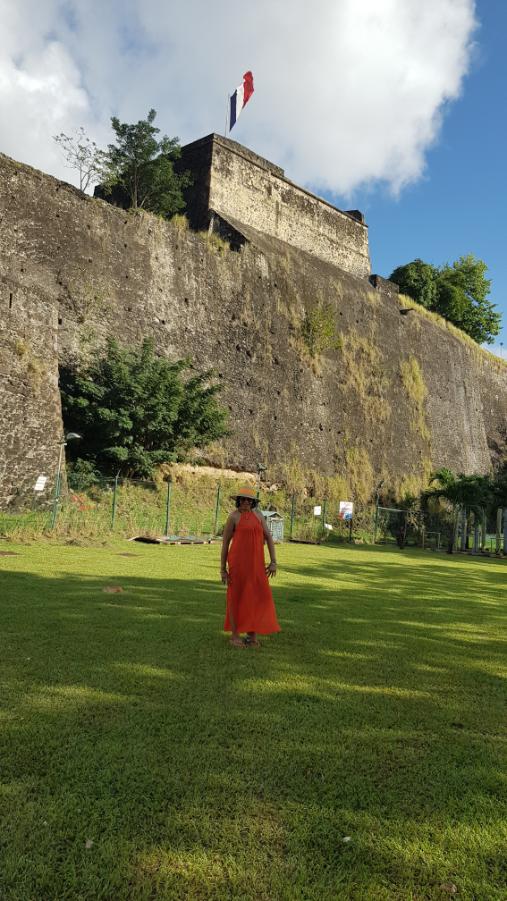
Enjoying Fort-St.-Louis

Martinique - the Caribbean Island of Flowers Cont...

MARTINIQUE SAFETY AND SECURITY

I experienced no personal or safety issues during my stay in Martinique. It is a safe country, and major crimes are rare. Nevertheless, as with all foreign countries, it is wise to be vigilant, as some locals have reported minor crime-related issues.

Whether strolling through the city, hiking, walking on the beach alone, or going out to dinner at night, I always felt comfortable and secure. I did not encounter any pickpocketing, petty theft, or hear of any robberies or other criminal activities. While I noticed presence of a security guard or two at many of the stores and fast-food restaurants, oddly enough, I hardly saw any police officers on the streets.

Overall, I had a peaceful and safe vacation as a female solo traveller on the island.

AirTamer personal Air purifier. Breathe Cleaner Air Everywhere. It emits millions of negative ions that push harmful airborne pollutants and Virus away from your breathing zone thereby creating a sphere of cleaner air.

Disclosure

CoraDexplorer Affiliate Disclosure

Some of the links on this blog/website are affiliate links, and if you purchase products or services through these links a commission may or will be paid to the owner of this website.  The amount of commission varies from product to product.  All commission earned helps in the funding of this blog/website.

As an Amazon Associate, this site also earns from qualifying purchases.

Prices will be the same whether you use the affiliate link or not, you will NOT pay more by clicking through said affiliate links.  You are guaranteed a 100% safe link in helping to keep this site going”.

HOW EXPENSIVE ARE THE ACCOMMODATIONS, MEALS, AND TRANSPORTATION?

Martinique is an expensive destination, especially visiting from a cheaper country. The use of the Euro makes it pricier than many other Caribbean islands and even some European and Asian countries. If I had to compare it with Guadeloupe (another expensive country), I would say Martinique is noticeably more expensive, as Guadeloupe offers bargain shopping and discount stores, which Martinique lacks.

Meals and accommodation are costly, while public transportation (buses) is affordable but often irregular and unreliable. For example, a simple burger, fries, and drink at a Doner Kebab shop, which are usually the cheapest worldwide, can cost you €12.00-€15.00 easily. Basic meals at a local restaurants start around €12.00. Additionally, a short 5-8 minute taxi ride costs a minimum of €15.00. To top it off, accommodation prices are also quite high.

Martinique would easily make it on my list with Fort-de-France being one of the most expensive cities to visit worldwide.

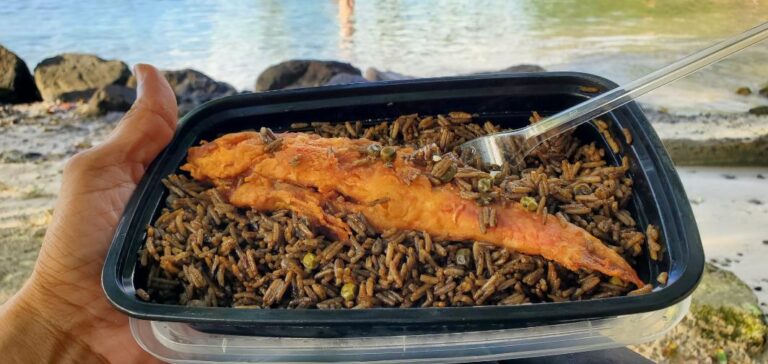
A simple, take away Haitian black Rice and snapper dish €14.00 - Expensive
Advertisement

The Hamilton Beach Home maker not only knead and bake breads but also cakes, just add ingredients and walla..hot bread!) . 

It can also knead just dough only without baking, it that your wish.  The Hamilton bread maker can be used to make jams and jellies as well. 

ABOUT MARTINIQUE’S FOOD

Martinique’s cuisine is a fusion of French, Creole, Indian, African influences, and European techniques. Its Dishes highlight the abundance of fresh fruits, seafood, vegetables, root crops, and spices. The food is flavourful, aromatic, and truly delicious (no salt and pepper only as seasoning).

However, its cuisine is more than food; it is tied to tradition and heritage passed down from one generation to the next. Similar to their neighbours Guadeloupe, Martinique produces high-quality rhum-agricole (rum) from fresh sugarcane under strict AOC regulations.  

Below are six of their many dish you must try when visiting Martinique, the Caribbean island of flowers.

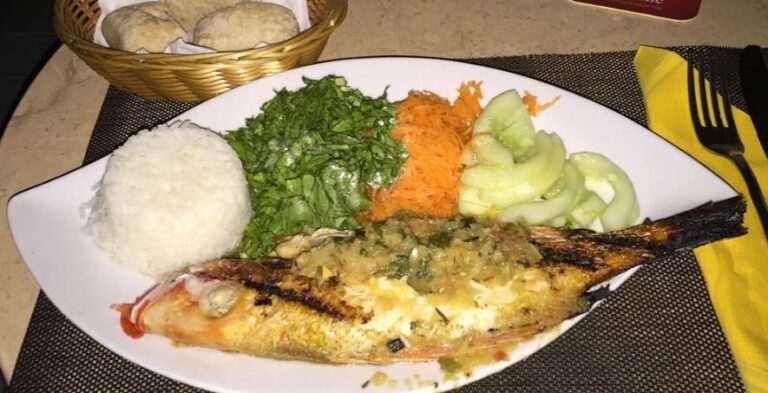
Grilled snapper - National dish. Martinique, the Caribbean Island of Flowers
Grilled snapper - National dish

Martinique - the Caribbean Island of Flowers Cont...

6 MOST POPULAR MARTINICAN DISHES YOU MUST TRY

  1. Grilled snapper (National dish) Grilled snapper with Creole sauce, also known as sauce chien. This dish is prepared with chives, onions, parsley, tomatoes, pepper, and other spices.
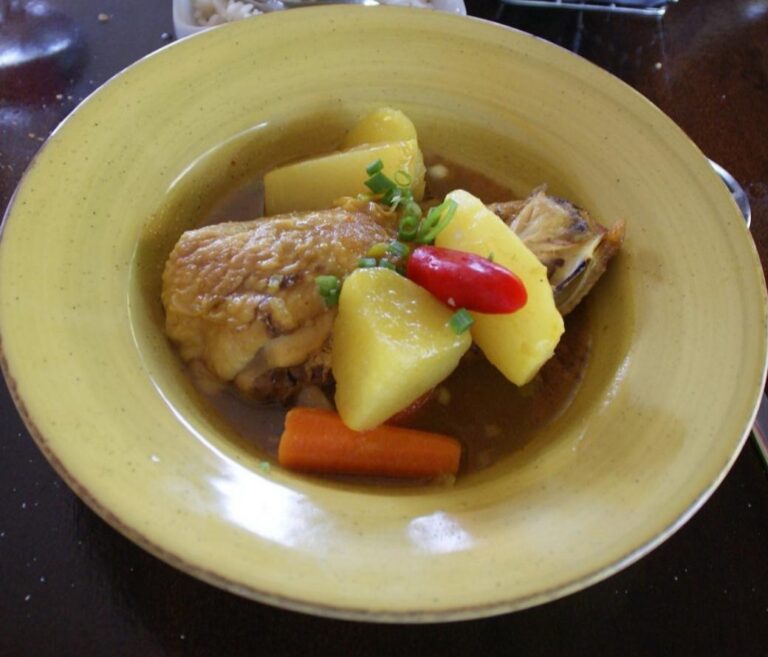
  1. Colombo de Poulet (Chicken Colombo) – This fragrant and unique dish has a distinctive colour of Tamil origins. Martinique’s take on curry cooked in spicy Creole sauce. The chicken is marinated in a blend of turmeric, coriander, garlic and thyme, then slow-cooked with vegetables such as eggplant, potatoes, and carrots. Resulting in a hearty, aromatic stew that they serve with rice and plantains.
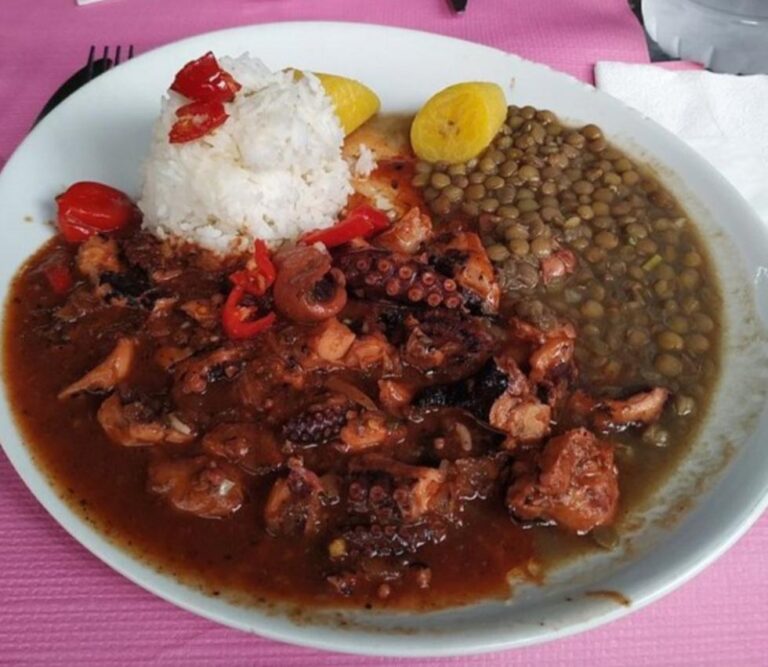
  1. Chatrou (Octopus Stew) – is a tender octopus stew cooked with onions, garlic, tomatoes, and thyme. This dish is a testament to Martinique’s abundant seafood offerings and is often served with rice, fried plantains or a side of green salad. Its deep, savoury flavours capture the essence of island cuisine.
  1. Lambis (Conch stew) – a cherished delicacy in Martinique. This shellfish is often grilled, stewed or prepared in a Creole-style sauce with tomatoes, peppers, and onions. Its slightly chewy texture and mild flavour make it a standout choice for seafood lovers.
  1. Blaff (Fish Soup) – Blaff is a light and flavourful fish soup made by poaching fresh fish in a broth infused with lime juice, garlic, parsley, and chilli peppers. It’s often paired with cassava or breadfruit, making it a wholesome and satisfying meal.
  1. Stuffed Crab – Seafood is prevalent around the island, and one of those delicacies that are famous among locals is the stuffed crab. Stuffed crabs (crabe farci) are a popular carry-out dish that can be enjoyed on the go or in a casual restaurant, served as an appetizer. The plate is usually served in a plastic shell with a mixture of flavours.
Blaff. Martinique, the Caribbean Island of Flowers
Blaff
Lambis. Martinique, the Caribbean Island of Flowers
Lambis with lentils, rice and provision, typical local dish

6 MUST-DO/VISIT SITES OF INTEREST IN MARTINIQUE

  1. Mount Pelee Volcano – responsible for the black sandy beaches in the North of the island. Additionally, the Pitons du Carbet, a massif of the volcano, is a big attraction and worth a visit.
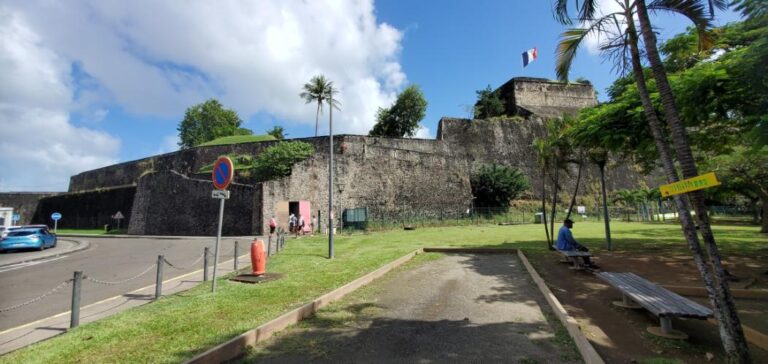
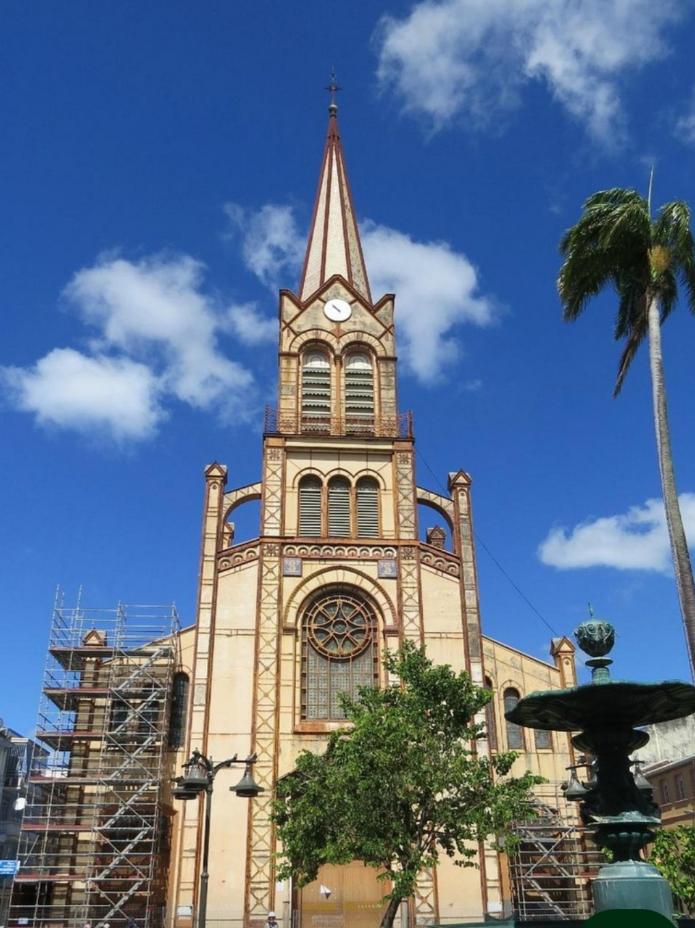
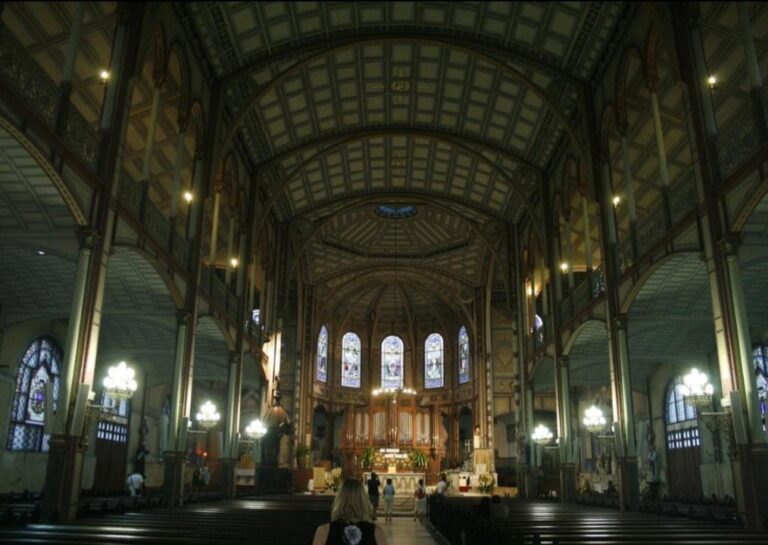
  1. Fort-St.-Louis – a historical Coastal Fortress built in 1640. Visit for its history and the views of the city and harbour. The-Louis Cathedral nearby is also a definite must-see. It is a neo-Gothic iron frame structure that was completed in 1895 and can withstand hurricanes.
  1. Les Salines Beach – considered one of the best beaches in Martinique and the Caribbean for its golden sun and crystal clear waters.
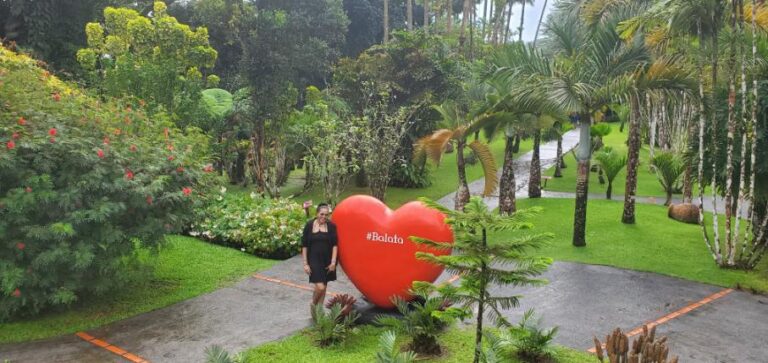
  1. Balata Gardens – located outside Fort de France the garden is a Botanical Haven, featuring a stunning collection of flowers, plants, and trees. It features a series of suspended bridges that allow visitors to walk among the tree tops. Offering a unique and picturesque perspective of the island/s lush flora and fauna. FYI, it costs €15.00 and is truly a must-see.
  1. The Diamond Rock (Le Rocher du Diamant) – an inhabited island off Martinique’s Southeastern coast, and played a significant role in it naval history during the Napoleonic Wars. What’s more, the rock is now a popular site for diving and for the marine life surrounding its waters.
  1. Anse Caffard Slave Memorial – this Memorial is a moving tribute to the victims of a tragic slave shipwreck off Martinique in 1830. It is a must-see for those interested in the islands history and Heritage.
The famous Balata Garden
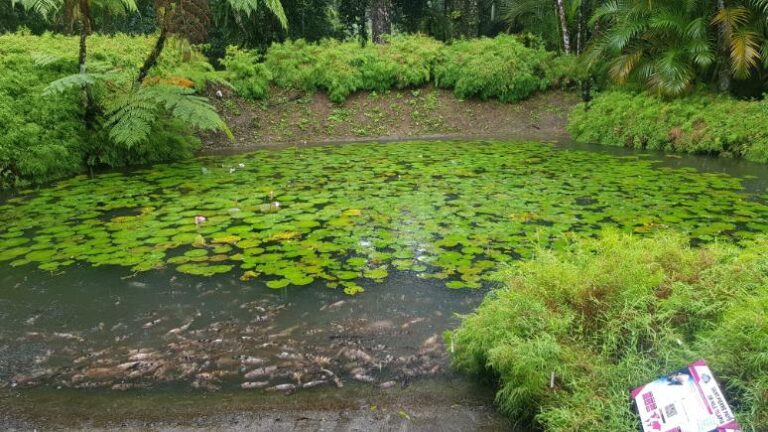
A waterlily pond with fish at the Balata Garden. Martinique, the Caribbean Island of Flowers
A waterlily pond with fish at the Balata Garden
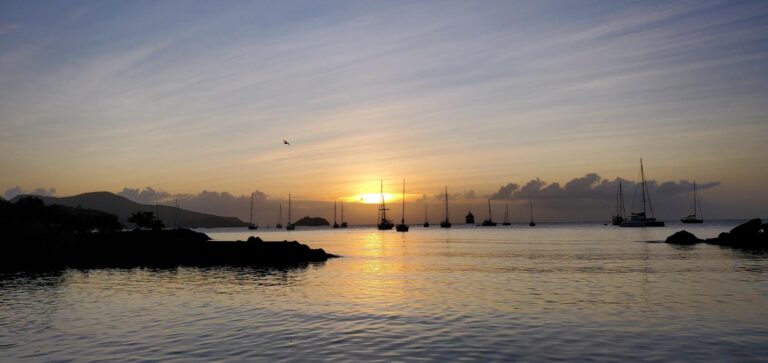
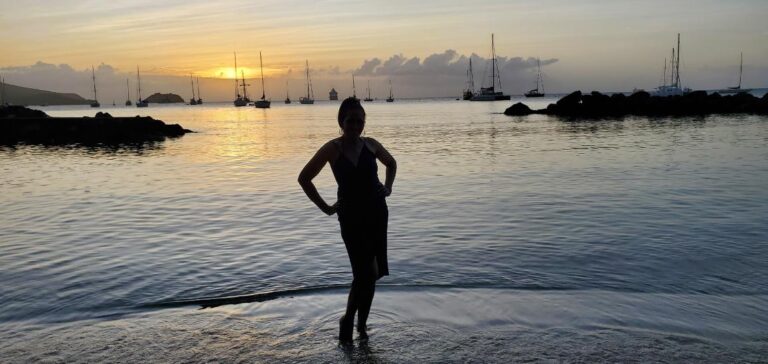
The sunset at Anse Mitan Beach. Martinique, the Caribbean Island of Flowers
The sunset at Anse Mitan Beach
Enjoying the sunset at Anse Mitan Beach
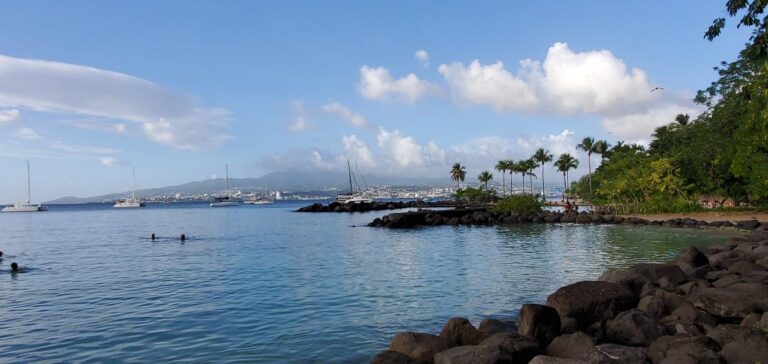
Anse Mitan Beach. Martinique, the Caribbean Island of Flowers
Anse Mitan Beach
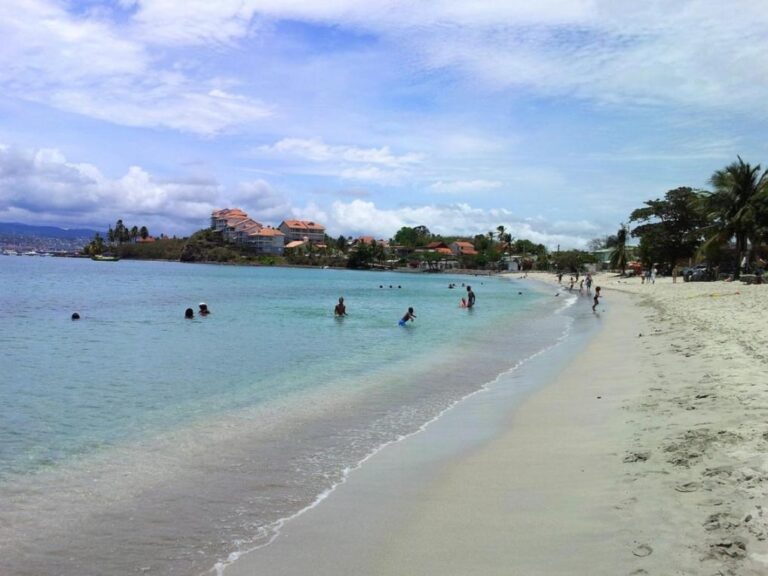
Anse Mitan Beach. Martinique, the Caribbean Island of Flowers
Anse Mitan Beach
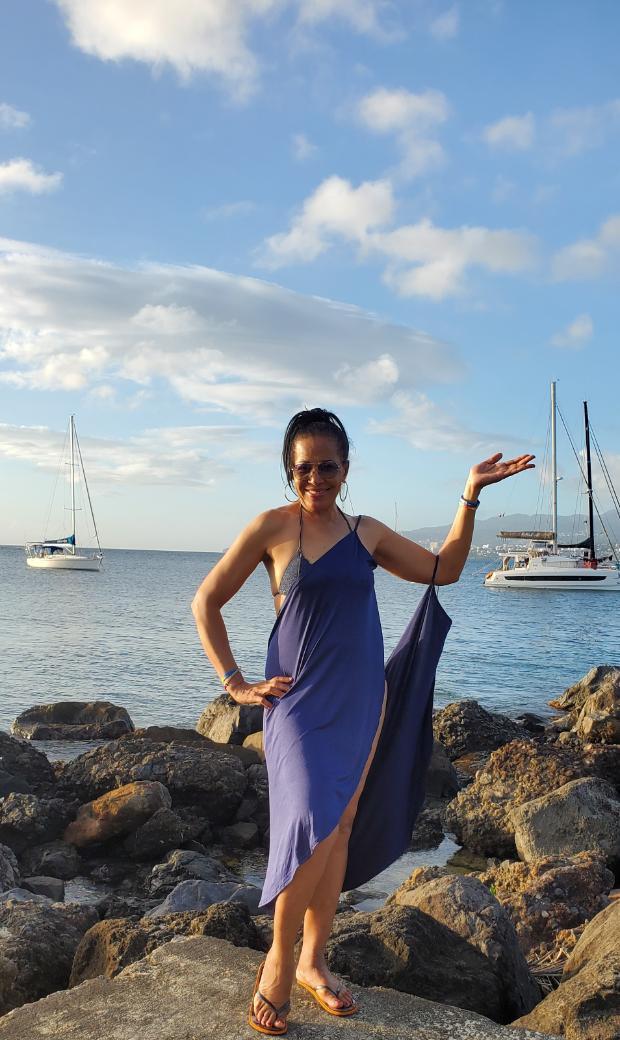
Enjoying Anse Mitan Beach
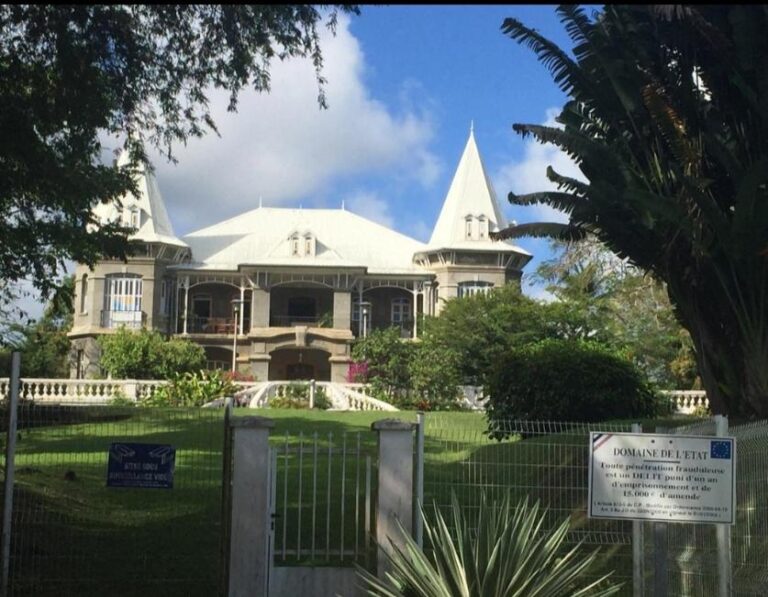
The Distillerie la Favorite. Martinique, the Caribbean Island of Flowers
The Distillerie la Favorite
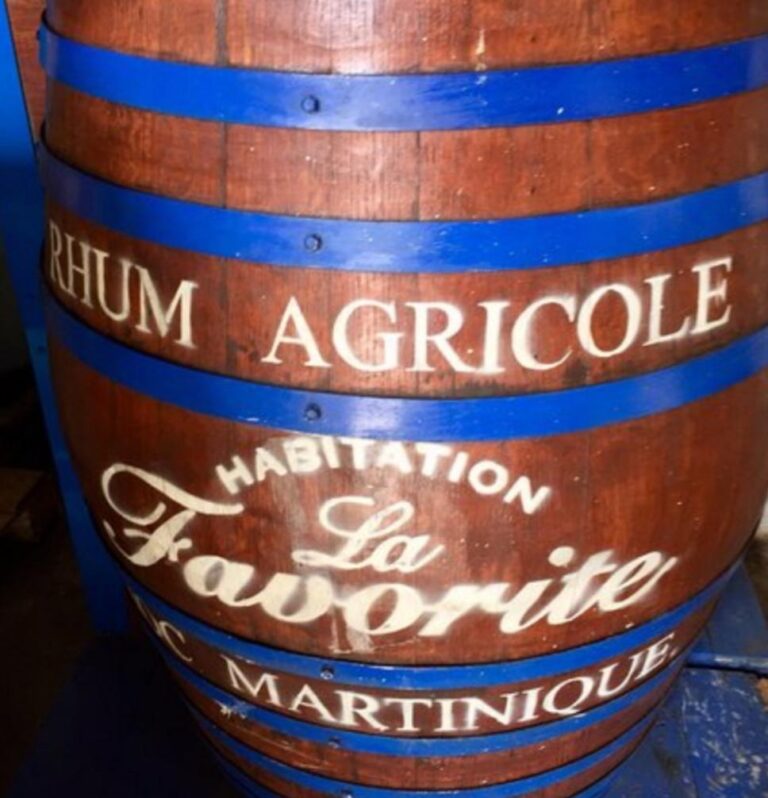
Rhum Agricole at the Distillerie la Favorite. Martinique, the Caribbean Island of Flowers
Rhum Agricole at the Distillerie la Favorite
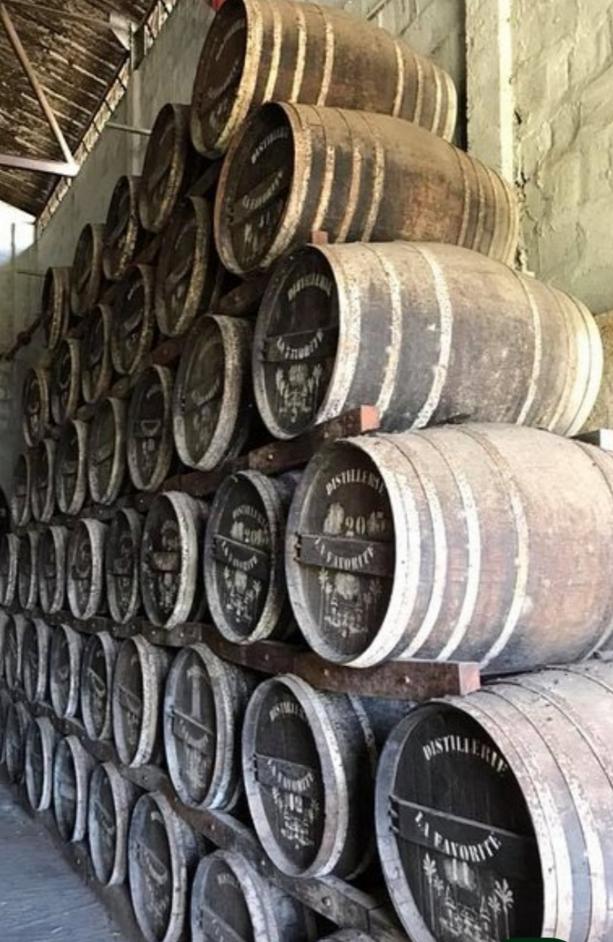
Inside the Distillerie la Favorite. Martinique, the Caribbean Island of Flowers
Inside the Distillerie la Favorite
Beautiful Fort-St.-Louis. Martinique, the Caribbean Island of Flowers
Beautiful Fort-St.-Louis
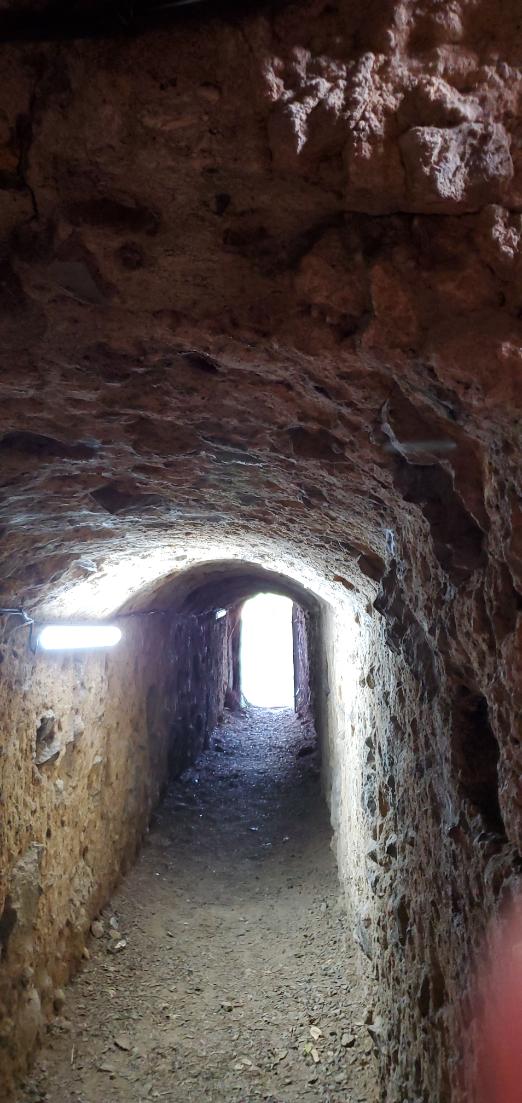
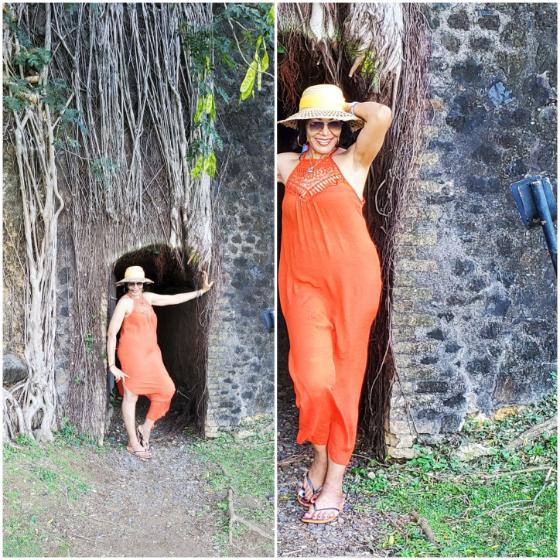
A tunnel at Fort-St.-Louis. Martinique, the Caribbean Island of Flowers
A tunnel at Fort-St.-Louis
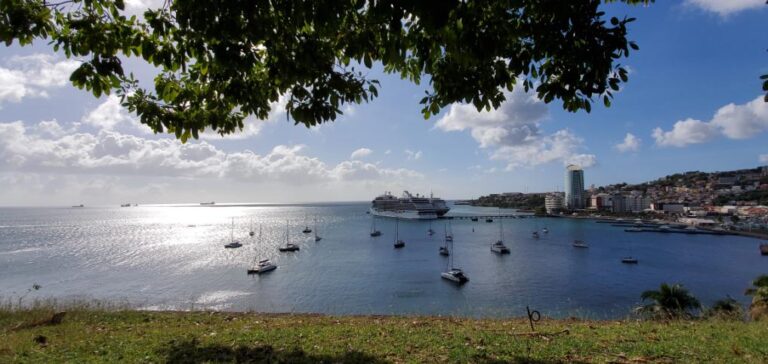
A view of the city and coastline from Fort-St.-Louis. Martinique, the Caribbean Island of Flowers
A view of the city and coastline from Fort-St.-Louis
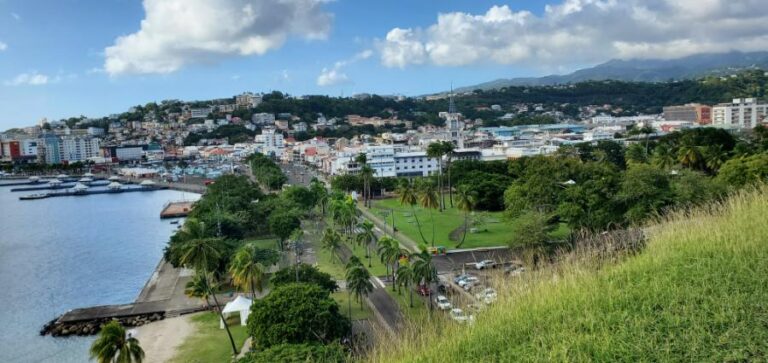
A view of the city and coastline from Fort-St.-Louis. Martinique, the Caribbean Island of Flowers
A view of the city and coastline from Fort-St.-Louis
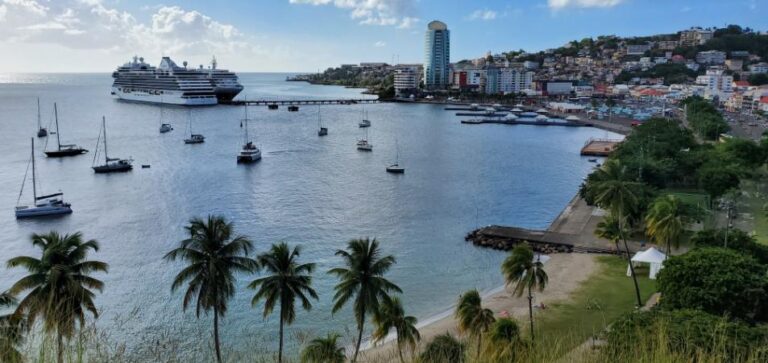
A view of the city and coastline from Fort-St.-Louis. Martinique, the Caribbean Island of Flowers
A view of the city and coastline from Fort-St.-Louis
Enjoying Parc La Savane
Fort-St.-Louis. Martinique, the Caribbean Island of Flowers
Fort-St.-Louis
St. Louis Cathedral. Martinique, the Caribbean Island of Flowers
St. Louis Cathedral
The interior of the St. Louis Cathedral. Martinique, the Caribbean Island of Flowers
The interior of the St. Louis Cathedral

Martinique - the Caribbean Island of Flowers Cont...

SUMMARY

Martinique truly deserves a place on your travel list. It offers a perfect blend of Caribbean natural beauty and French culture, resulting in an interesting and unforgettable vacation experience. The island is safe, clean, culturally rich, and home to a diverse range of delicious cuisine, pristine beaches, historical architecture, and stunning landscapes.

However, to enjoy this piece of paradise comes with a huge price tag. Although it is not a budget-friendly destination, it is still manageable with careful planning, advance bookings, and during the low travel season. Based on my experience, Martinique, the Caribbean Island of Flowers, is a destination I will highly recommend to all travellers

Please use the share buttons below on scroll, if you wish to share anything on this page.   The + button offers more share icon options when clicked.