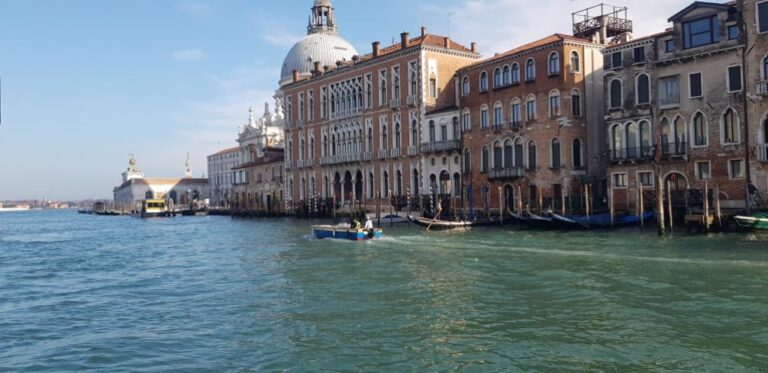
Venice is a major seaport in northern Italy, and the capital of both the province of Venezia and the Veneto Region. It is the 11th largest city in Italy by population. Venice, Italy’s floating city is also known by a few other names, including the city of canals. Moreover, the historical center has no “drivable” roads for cars or motorbikes, just canals that crisscross the city (in “S” shapes). Furthermore, the Grand Canal, the largest and most prominent of all canals, is also one of the most romantic places in Italy.
Venice’s best and main form of transport in the historic centre is the unique and colourful Gondolas. Although outnumbered by other water ferries, they remain the symbol of Venice. From across the Grand Canal on both sides of the canal, there are many Gothic and restored palaces and squares. Moreover, in 1987, they collectively designated Venice and its Lagoons a UNESCO World Heritage Site. Please keep reading to learn more about my short visit to Venice, Italy’s floating city.
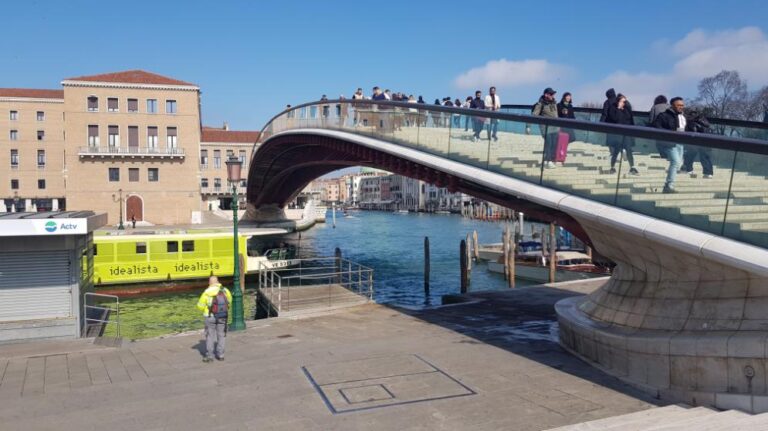
Ponte della Costituzione (Constitution Bridge) aka Calatrava Bridge - a glass pedestrian bridge
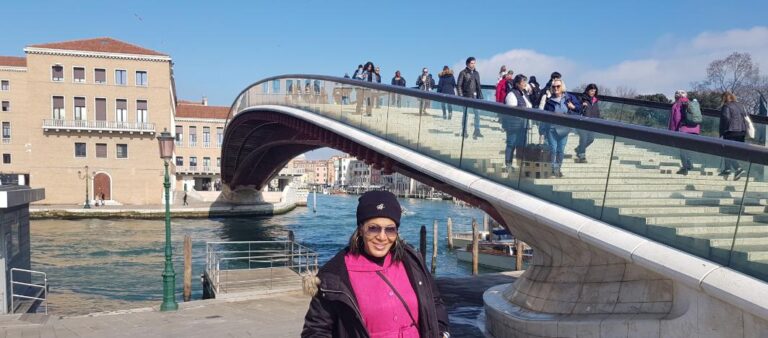
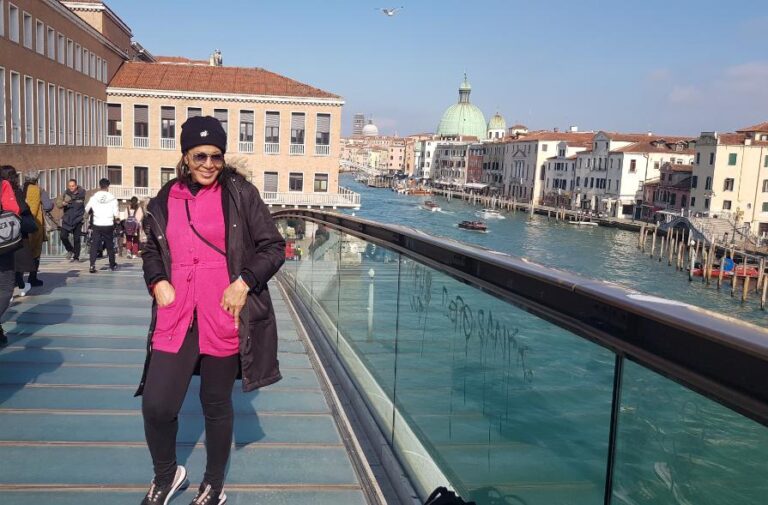
At the Ponte della Costituzione (Constitution Bridge) aka Calatrava Bridge - a glass pedestrian bridge
Some of the links on this blog/website are affiliate links, and if you purchase products or services through these links a commission may or will be paid to the owner of this website. The amount of commission varies from product to product. All commission earned helps in the funding of this blog/website.
As an AmazonAssociate, this site also earns from qualifying purchases.
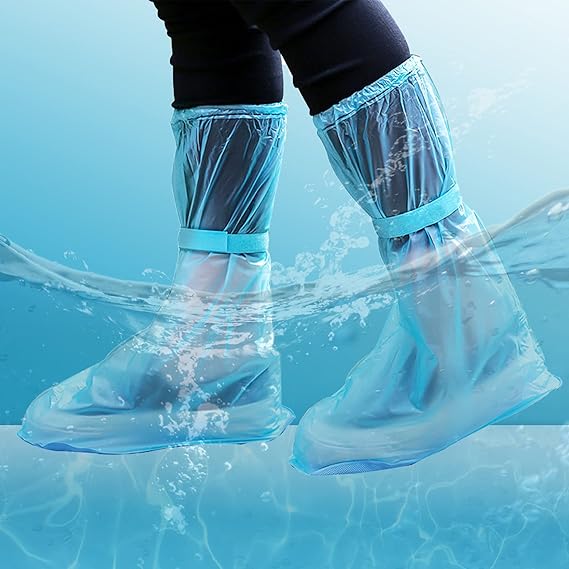
2 Pairs Boot and Shoe Covers-Water and Skid Resistant Boot Covers, Reusable Rain Shoe Covers for Men and Women Galoshes, Rain Boots, Over shoes
WHY IS VENICE ITALY’S FLOATING CITY OR THE CITY OF CANALS?
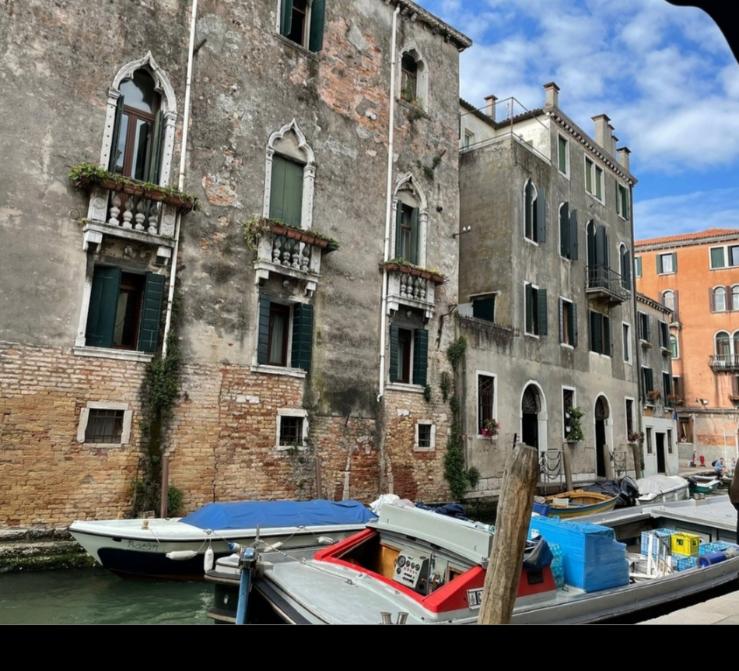
Venice, Italy’s’ floating city is also known as the city of canals because of its setting. The city was once a lagoon area in the Adriatic Sea, built and developed into more than 126 small, liveable islands. These mini-islands are separated by numerous canals and linked by more than 400 bridges, which provide access to them. The buildings are supported in the mud on wooden stakes and platforms, and appear to be floating.
As history would have it, in the 5th century, people fled their homes to avoid barbarian conquerors. These marshlands, located off the mainland, offered some protection from them because they dared not cross the waters of the lagoon.
However, as the invasions in Italy worsened, more and more people fled the mainland and built settlements on reclaimed lands in the lagoons, which eventually gave rise to a new city. Moreover, it was once the centre of the maritime republic and a great seaport in late medieval Europe. It just shows that with the right mindset and determination, what was considered useless can emerge into something beautiful and valuable.
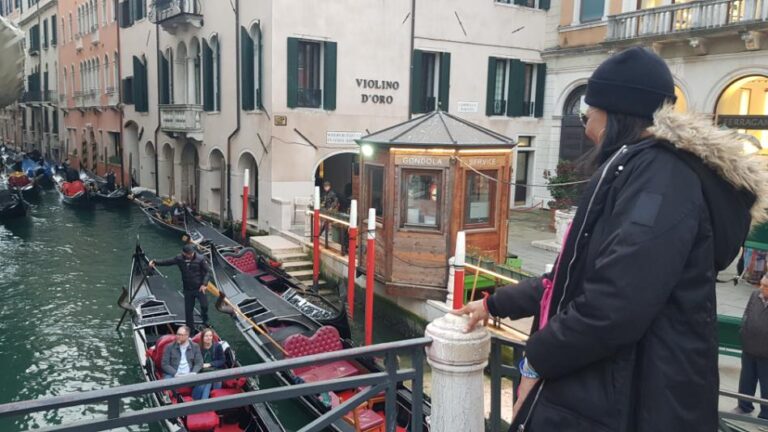
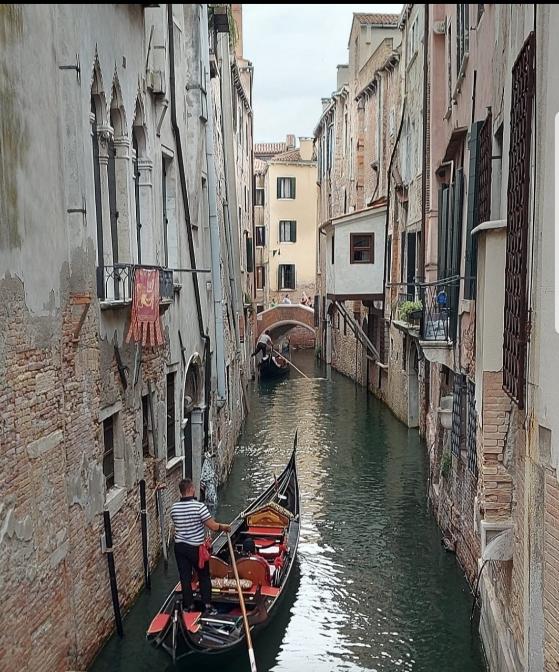
Admiring the Gondolas from the bridge on a side street
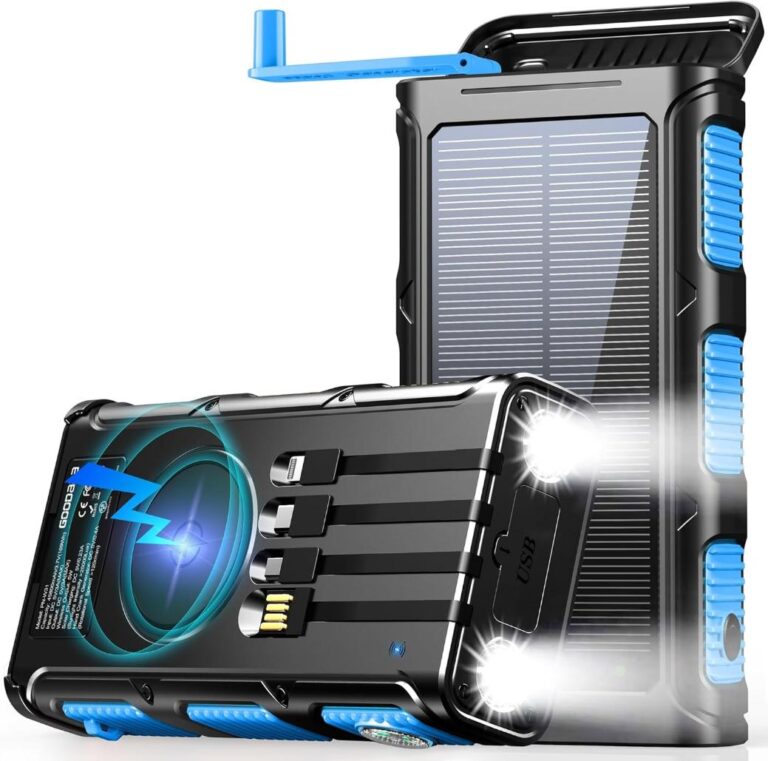
Prepare for Blackouts – GOODaaa Power Bank Wireless Charger 45800mAh Built in Hand Crank and 4 Cables 15W Fast Charging Power Bank 7 Outputs & 4 Inputs Solar Portable Charger, SOS/Strobe/Strong Flashlights, Compass
Prepare for Blackouts – Emergency Weather Radio NOAA/AM/FM with 4000mAh Portable Power Bank, USB/Solar/Hand Crank Charging, Flashlight, SOS Alarm, Radios for Outdoor & Indoor Hurricane, Camping Survival Essentials
To enter Venice’s historic city center, there are three main transportation options: bus, train, or airplane. The most budget-friendly way if you are arriving from a nearby country is by bus or train, especially if you are already in Europe. Furthermore, the railway system is fairly economical, and depending on your city or country of departure, it is less than both buses and airplanes. Understandably, flights are the most expensive, and Marco Polo International, Venice’s closest airport, is only 13 km away.
Depending on the location of your accommodation, you might still need to take a bus, then a water taxi to get to the city center. On the other hand, if you arrive in Italy by bus, on Tronchetto Island, take the “People Mover” (elevated shuttle train) from the bus station to Piazzale Roma. Additionally, if you arrive by metro, take the water taxi from the station to the Port of Venice. If you arrive by airplane, it’s a 25-minute ride from the airport to Piazzale Roma. Finally, from Piazzale Roma (the transportation gateway), you can begin enjoying the historical city on foot or the Vaporetto (public water bus/taxi).
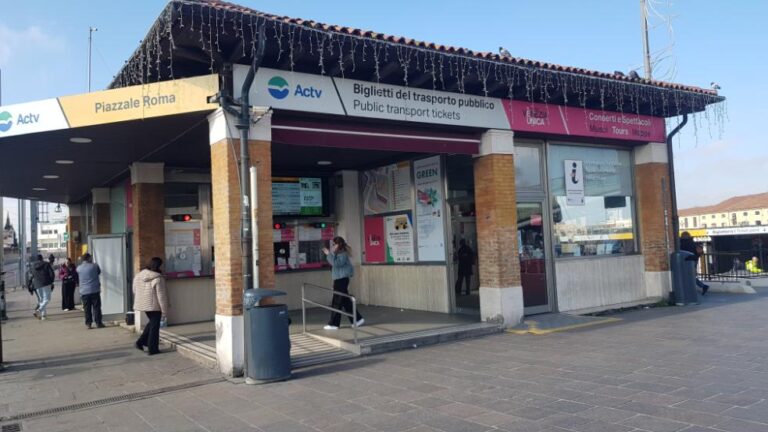
The Vaporetto Ticket Office in Piazzale Roma
Learn how to Save, Plan, and Travel Alone on a Budget
If you plan to visit Venice in 2025, be aware of the new requirements for ALL visitors, especially the day-trippers and sightseers not staying at a hotel. Here is what you should know.
Starting this year, 2025, the authorities have implemented a fee (introduced in 2024) called the Venice Access Fee. It will be in effect from April through July, primarily on weekends and holidays. Moreover, the fee costs 5 euros in advance (10 euros, less than 4 days before arrival) and 10 euros at the last minute.
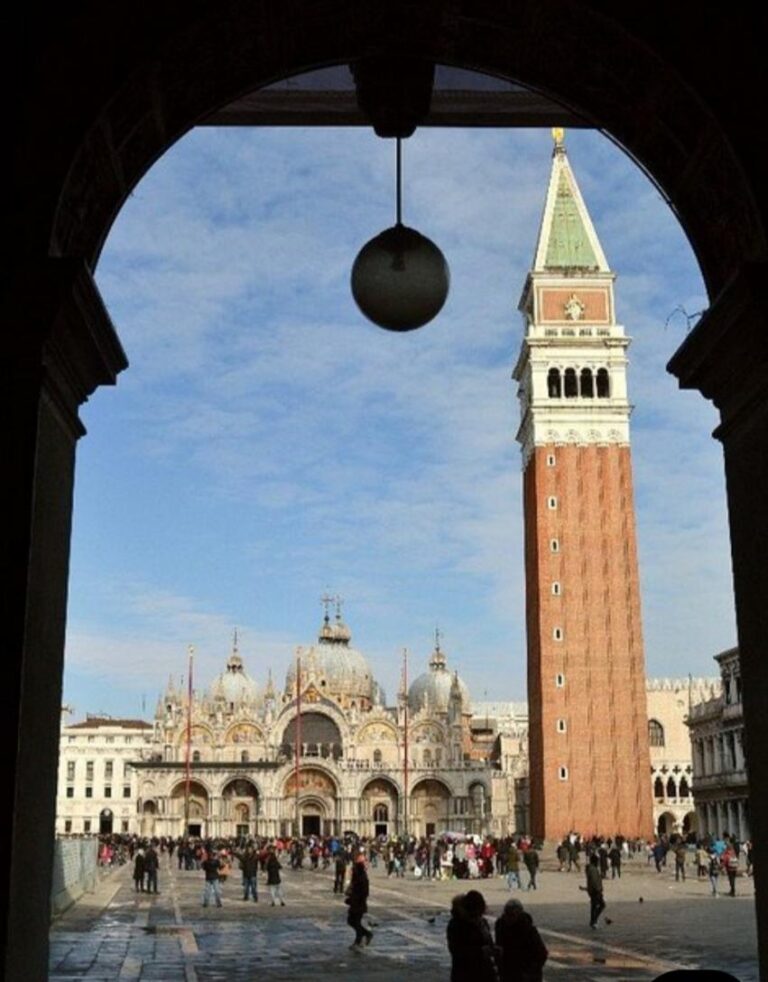
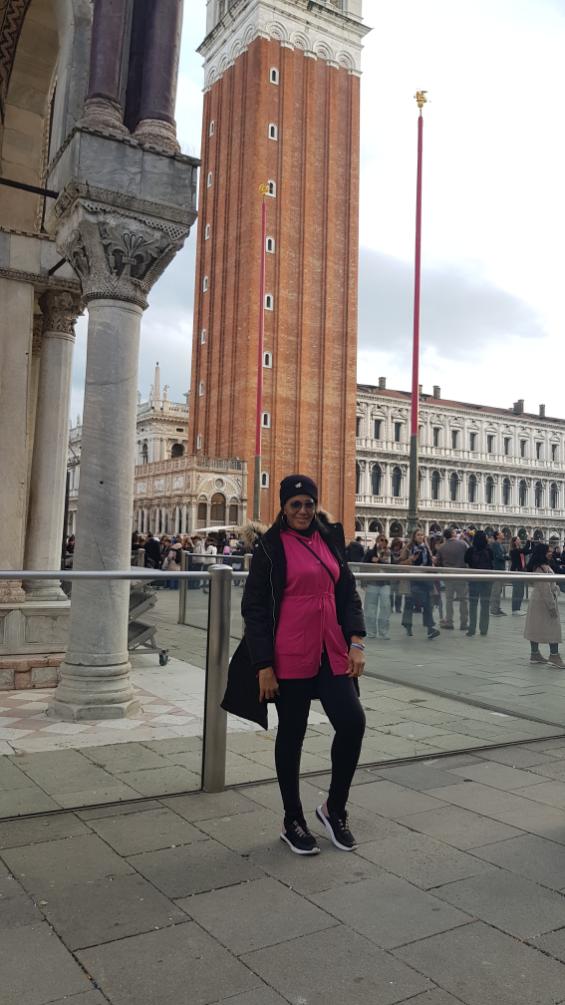
St. Mark's Campanile and bell Tower (the tallest structure in Venice) at St. Mark's Square
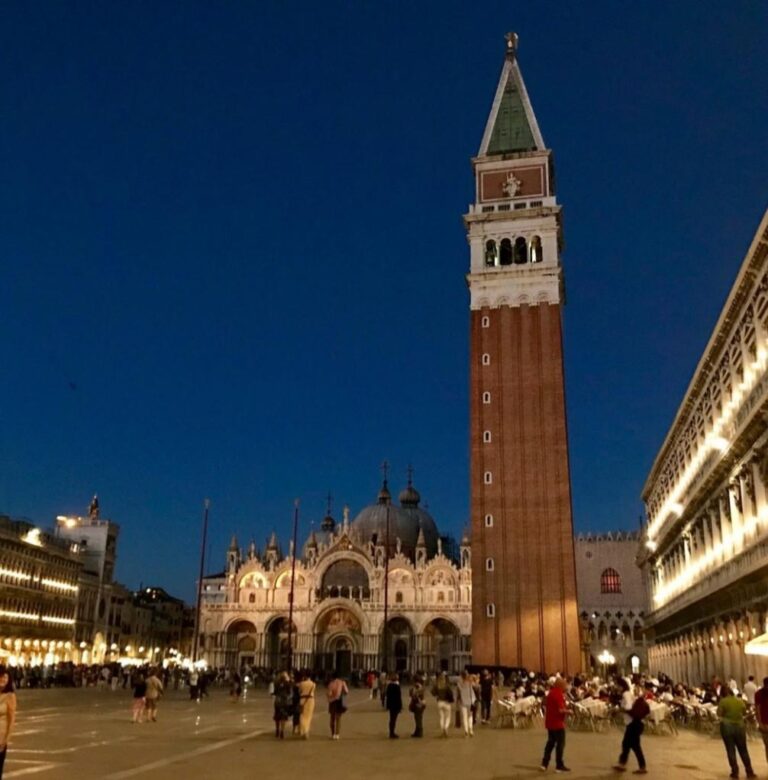
Night view of the Campanile di San Marco (St. Mark's Campanile). at St. Mark's Square
Further, its primary goal is to reduce the number of day-trippers, better manage the city’s fragile infrastructure, and somewhat appease residents who are overwhelmed by numerous visitors.
However, there are some exemptions: Children under 14 years old, the disabled, and anyone with a hotel booking in Venice will be fee-exempted, but must still register for the exemption. To be exempted, visitors must register online to obtain a QR Code, which must be presented upon request.
Additionally, it comes with a penalty for noncompliance; fines of up to 300 euros can be charged for non-payment of the fee or failure to possess your exemption code.
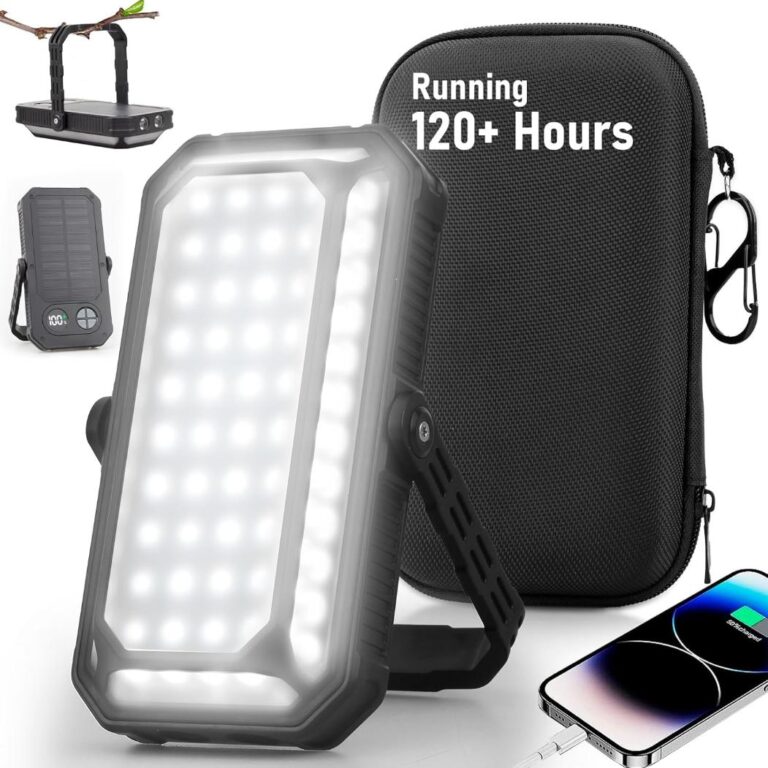
LED Camping and Blackout Lantern Rechargeable, 10000mAh Portable Camping Lights up to 120+ Hours, 12 Light Modes, Dimmable, LCD Digital Display, Waterproof, Camping Essentials for Power Outages, Emergency
Venice is a clean, small, unique, but slightly complicated city to maneuver due to its maze-like layout. It boasts stunning architecture and a rich history, dating back to the 5th century. As previously mentioned, there are more than 400 old stone bridges that join the islands together.
Yes, it is a pedestrian-friendly city because you can walk to most sites, but I find that you can get lost in its labyrinth pattern. Besides, if you are on a tight budget and will not be visiting the other small islands, you may not need to take the Vaporetto. However, if you are island-hopping, short on time, or too tired to walk, it might be necessary, especially if you are leaving the center to head back to your hotel, metro station, or the airport.
Notwithstanding, to get to the other tiny islands and navigate some of the sites further away, you must use the water taxis/buses (Vaporetti) or private taxis (Gondolas). Since it might be impractical if you are on a one-day visit with limited time, transport would be a must. Because many of the major sites are somewhat far from Piazzale Roma and the “People Mover” Station, and a bit tiring on foot.
Besides, it is a very delightful and satisfying canal ride, and the best way to see all the buildings on both sides of the canal, which is not doable by foot.
Enjoying Venice
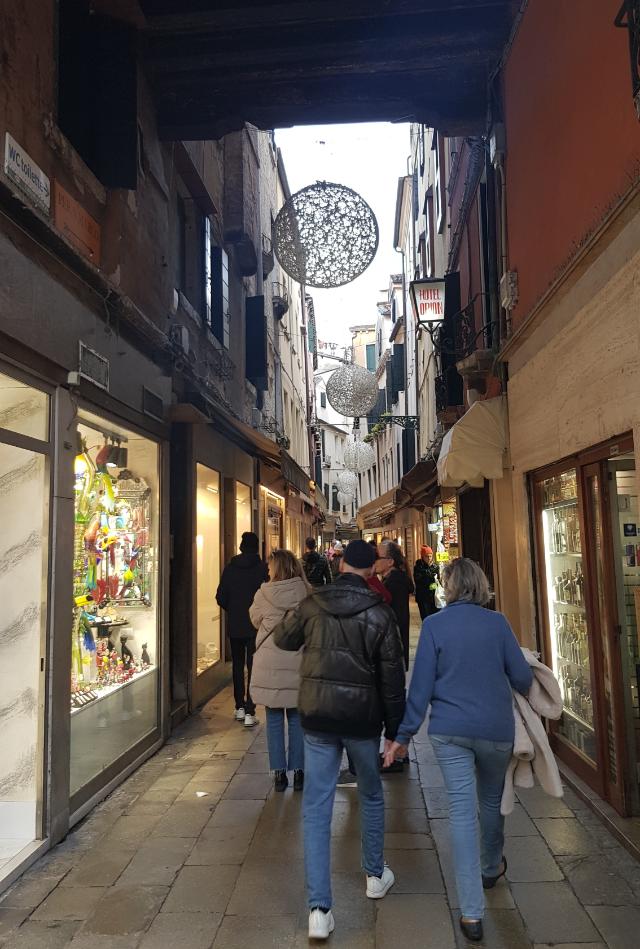
One of the narrow shopping street downtown Venice
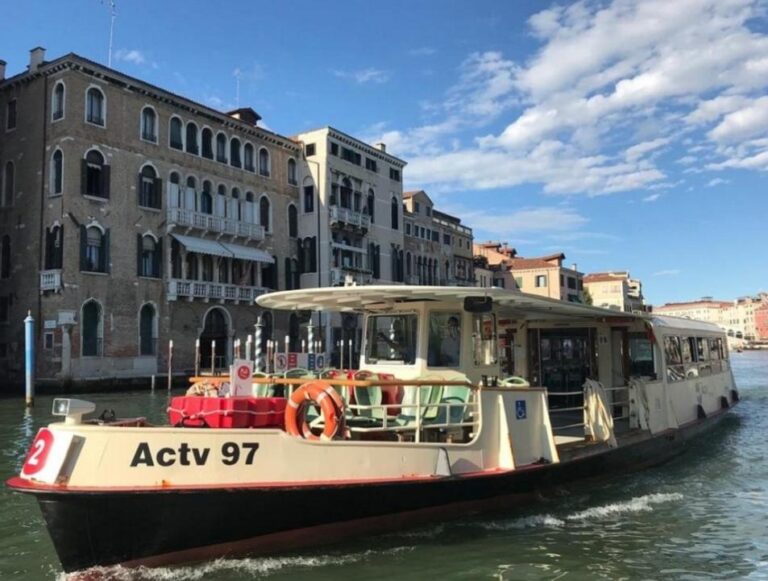
The Vaporetto (Public transportation)
Venice is truly a vibrant tourist hub, attracting countless visitors and boasting numerous waterways filled with public and private water taxis. Visualize the roadways in a typical city with vehicles in traffic, but replace them with boats and water canals as the main “roads.” Not only that, but there are a few traffic lights inside the water canals. I was rather surprised by this. That’s Venice, or more precisely, the historic center of Venice!
Not to be misconstrued, but outside Venice’s historical center, there is a main thoroughfare for buses, cars, etc. However, except at the designated parking lot called Piazzale Roma (the final stop), vehicles are prohibited from entering the heart of the historical center. Therefore, even residents living in the center use boats primarily to access their homes.
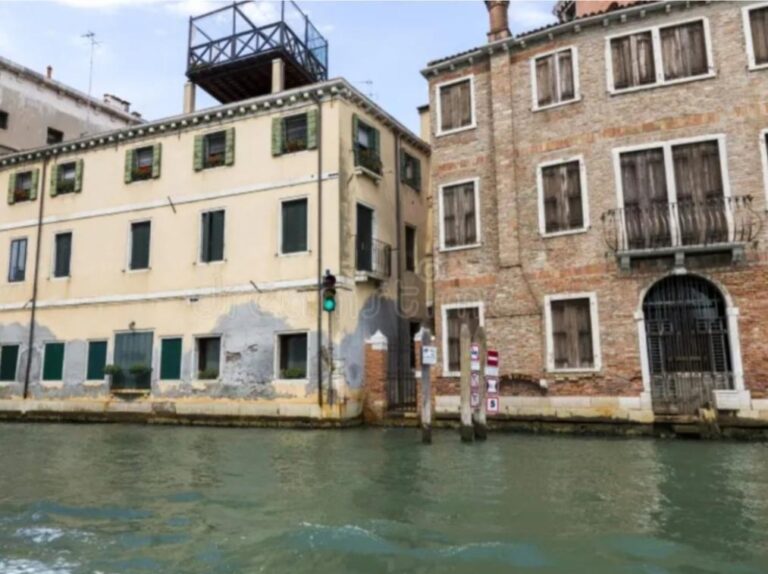
One of the few traffic lights in the canal
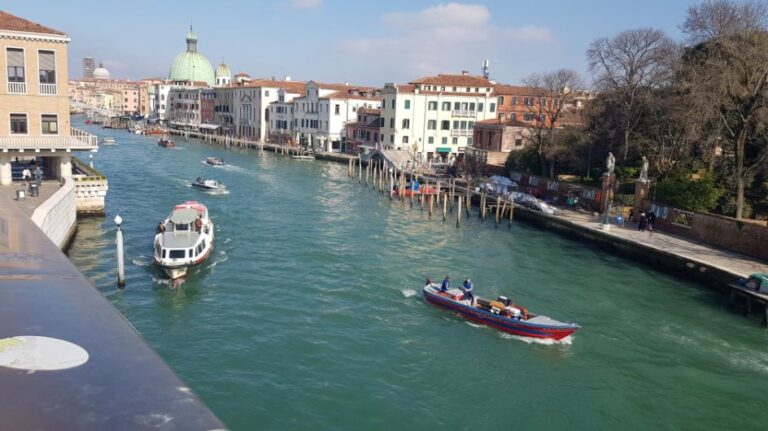
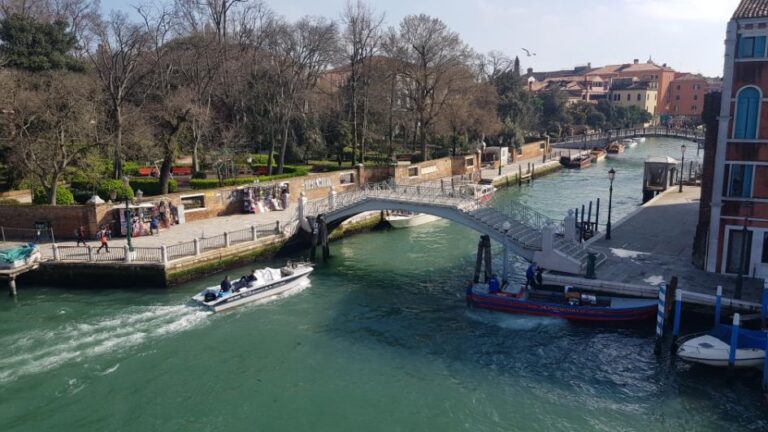
A view of the Grand Canal from Ponte della Costituzione (Constitution Bridge)
Venice, Italy’s Floating City…Cont...
Buildings lining the canals range from the poorest blocks (with houses of 3 or 4 stories) to great palaces. Additionally, along its banks are bridges, squares, and paved roads, allowing for exploration of the city on foot.
However, the walkways can become inundated with water (a popular sight seen on TV with people walking or dining in water), but only during high tide. Whenever this happens, there are places where you can purchase disposable galoshes to use to wade through it.
Nevertheless, if you would like to experience it, then visit at a time when the tide is most likely high.During my visit at the end of March 2025, the tide was low, and conditions in the canal and on land were almost perfect.
I was elated not to have experienced the flooded streets, especially when the temperature was still low. My day-trip was during the low travel season, yet the city center was still filled with visitors, especially its main and most popular square, Piazza San Marco(St. Mark’s Square). Venice is simply an extraordinary city with an enticing ambience and glam.
Buildings including the Basilica di Santa Maria Gloriasa dei Frari along the Grand Canal
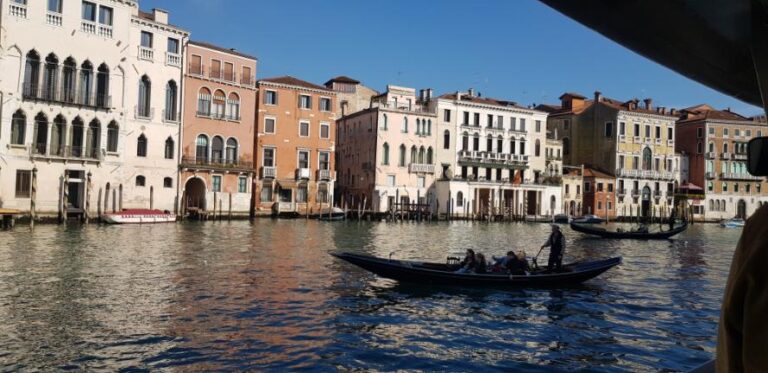
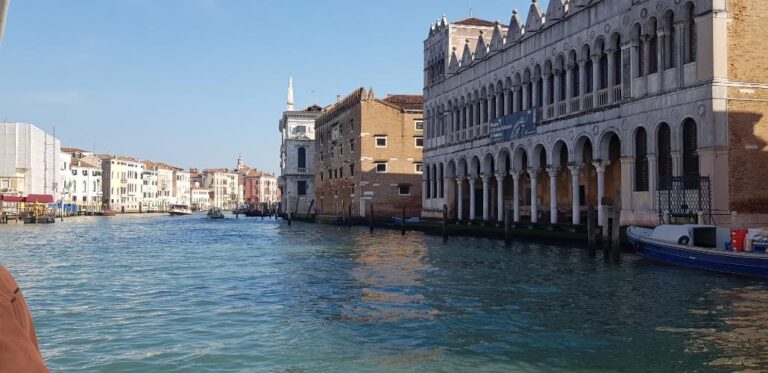
Buildings alongside the Grand Canal
Buildings alongside the Grand Canal
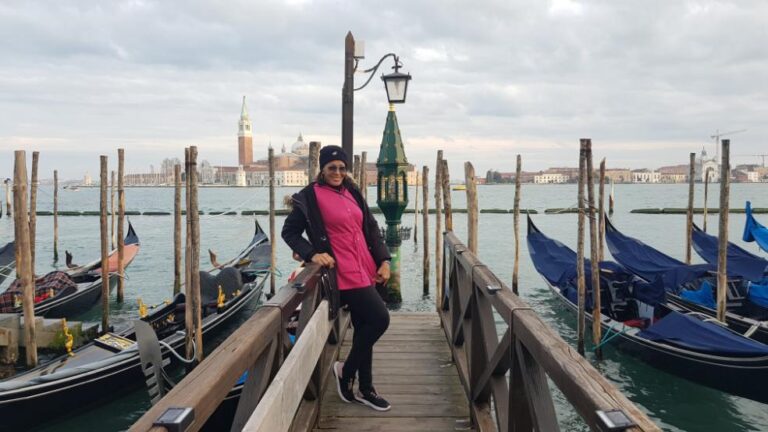
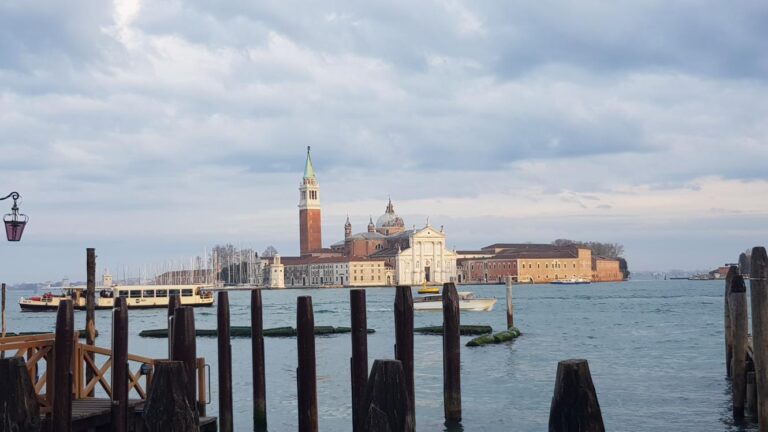
Harbour-side at St. Mark's Square with the St. George Maggiore Island in the background
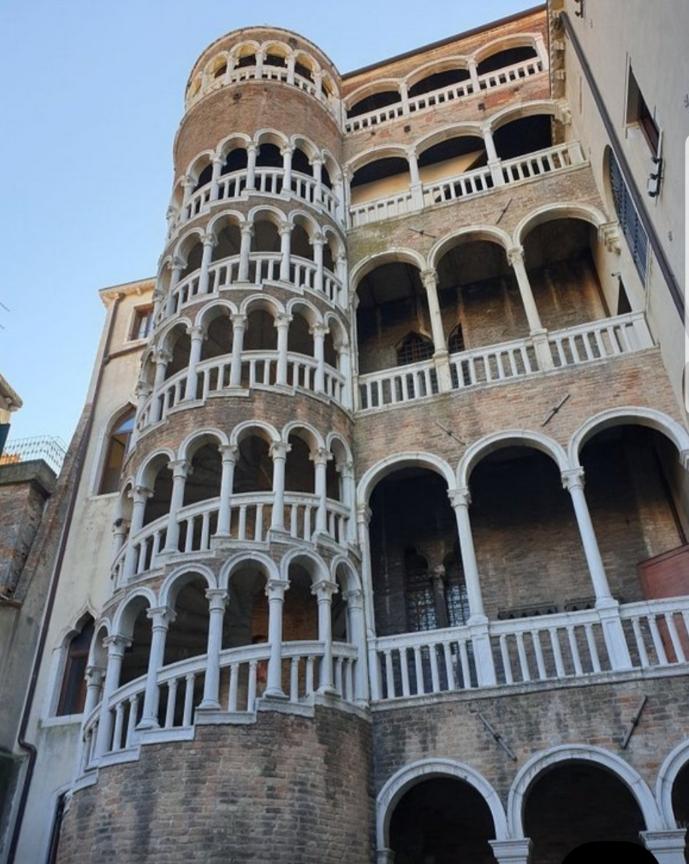
Scala Contarini del Bovolo (the tallest spiral staircase in Venice)
Prepare for Blackouts – KITWLEMEN 20000mAh Battery Powered Camping Fan – 58H Max Cooling, Rechargeable Battery Operated Desk Fan with 4 Speeds, Bright Light & Hanging Hook, Portable for Tent Outdoor, Hurricane, or Power Outage
The languages spoken – Italian (the official language)
Official currency – Euro
Venice has over 178 canals, 417 bridges, and 72 of the bridges are private (meaning they go straight to someone’s home). Moreover, only four bridges cross the Grand Canal. Besides, the bridges are a mix of materials; 300 are made of stone, 60 of iron, and 57 of wood.
Houses in Venice are numbered according to districts, not streets, making them difficult to locate.
Venice is shaped like a fish. The best view of this is from directly above the city.
The Realto Market, a few steps from the Realto Bridge, was founded in 1097. During the Venetian Empire, it was one of the largest and most powerful spice markets in the world. It was famous for its spices, animals, and jewelry in Europe and beyond.
Marco Polo was a Venetian born in 1254. After years of travel, he was captured by Genoa. While he was imprisoned, he wrote the book of the marvels of the world, commonly called “The Travels of Marco Polo.”
The Venetian masks have a history dating back to the 13th century and are not just souvenirs. They were once used as part of daily life to conceal the wearer’s identity during parties. These masks are intertwined with their culture. Today, they are primarily associated with the Venetian Carnival, which originated in the 11th century..
The most famous boats in Venice are the gondolas, and they are also the most expensive to ride.
A view Ponte degli Scalzi Bridge or Ponte dei Scalsi Bridge from Ponte della Costituzione (Constitution Bridge).
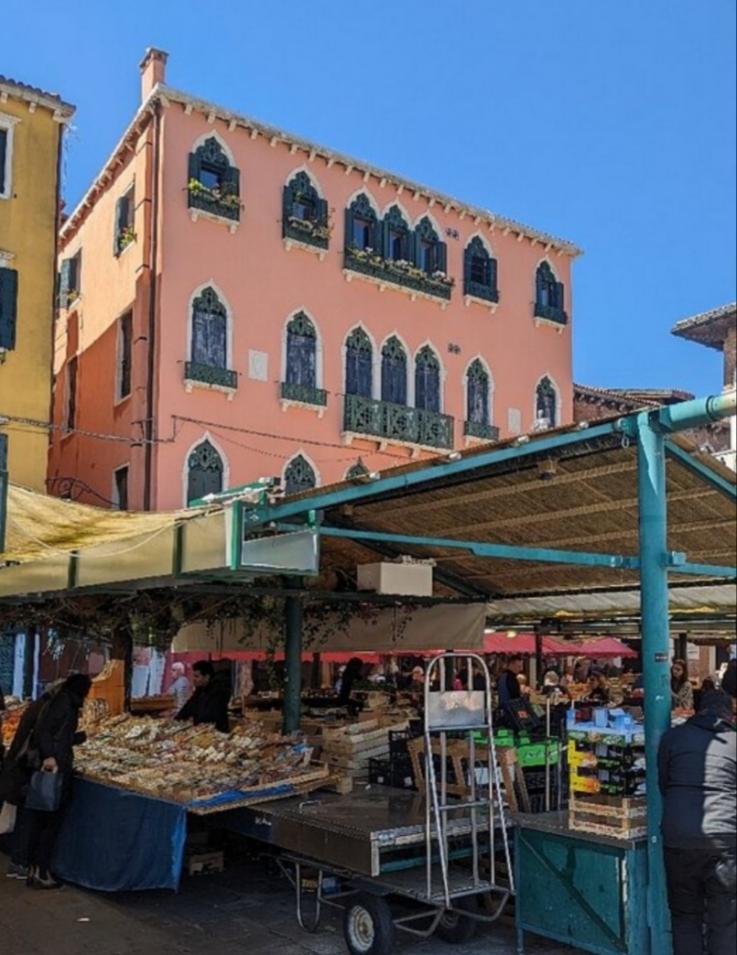
Mercato di Rialto - established in 1097
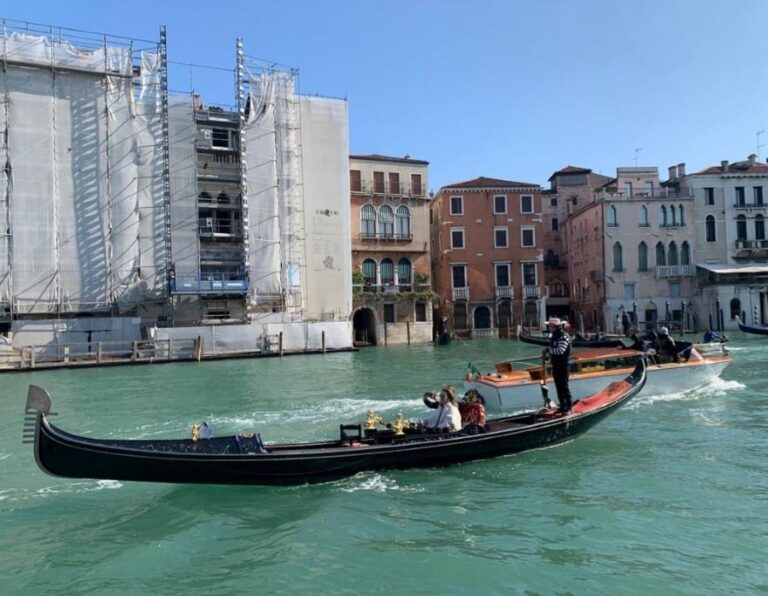
The Gondolas (private taxi)
Prepare for Blackouts – Emergency Weather Radio NOAA/AM/FM with 4000mAh Portable Power Bank, USB/Solar/Hand Crank Charging, Flashlight, SOS Alarm, Radios for Outdoor & Indoor Hurricane, Camping Survival Essentials
There are no cars in central Venice, and in some areas, no bicycles either. Therefore, getting around is done on foot or by boat. Fun fact: about 400 gondolas float through the canal.
Gondolier licenses are hard to obtain in Venice because steering a gondola is not a profession that any ordinary citizen can easily take up. Similar to a driver’s license, the city officials issue gondola licenses, which are typically passed down from father to son.
The prominent 8th-century bronze Lion sculptures of St. Mark’s Square are not Venetian. Believe it or not, but they were created and shipped to Venice during the Tang Dynasty in China.
The phenomenon Acqua Alta, or high tide, sometimes occurs during autumn and winter months (October to March).
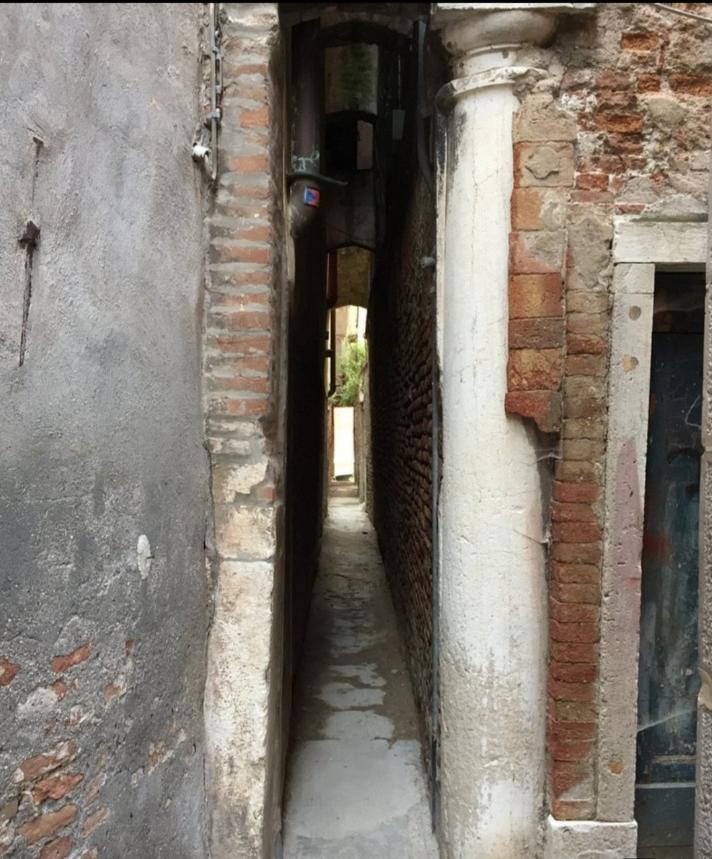
Venice has a street that narrows to 53 centimeters, named the Venice Calle Varisco. It is located in the Cannaregio neighborhood, and is 53 cm at its narrowest point. Furthermore, it is the third narrowest street in all of Italy: La Ruetta (Civitella Del Tronto) being the narrowest at 40 centimeters, followed by Ripatransone’s at 43 centimeters.
Ghetto Ebraico in Venice, Italy, is the oldest Jewish Ghetto in the world.
Venice is slowly sinking by 1 – 2 millimeters per year. Due to its inadequate infrastructure and construction on soft sediment layers in muddy lagoons, it has been slowly impacted over time.
Ghetto Ebraico (the oldest Jewish Ghetto in the world)
Calle Varisco (the narrowest street or Alley in Venice)
Gondolas along narrow canals
ABOUT VENETIANS
Italians are usually very outgoing and friendly people, especially those I met during previous visits to Florence and Rome. The locals in Venice, also referred to as Venetians, are neither here nor there on the friendliness scale. However, those in the service industry were rather outgoing, especially some of the water taxi operators.
Notwithstanding, it is understandable that it can be overwhelming for the Venetians who live in a city with a steady flow of tourists. Not only this, but with the number of Airbnb and apartment rentals, prices have also escalated for them. Therefore, if they did not seem too thrilled, one can understand their reasoning, especially since many have relocated to other cities due to escalating prices. Despite this, they did not appear to be unfriendly or unpleasant.
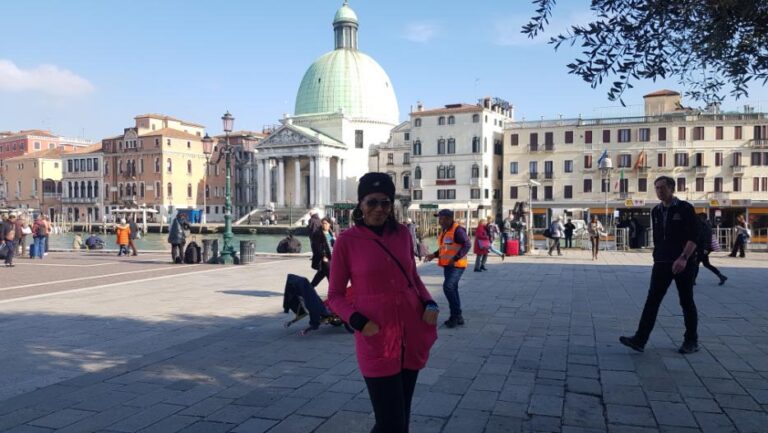
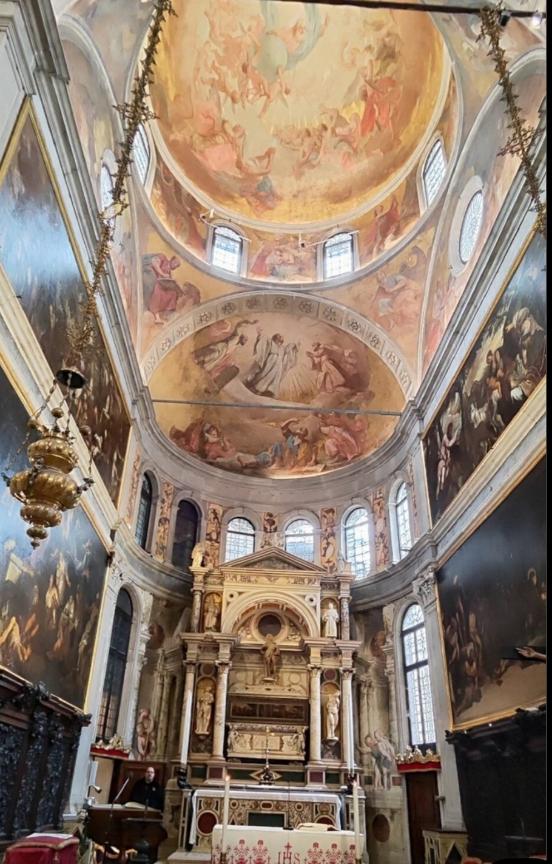
At the San Simeon Piccolo Church
HOW EXPENSIVE ARE THE ACCOMMODATIONS, MEALS, AND TRANSPORTATION?
Prices for almost everything in Venice are expensive. The cost of accommodation (even the hostels) during the low travel season is exorbitant, much less so during the peak period. When choosing the most economical accommodation, further away from the city center is better. However, with the additional cost of transport back and forth, there is no getting around paying a high price in Venice, especially on a tiny budget. Venice is among some of the most expensive cities to visit worldwide.
As previously mentioned, the primary mode of public transportation is boats, which are also expensive: the Vaporetto costs 9.50 euros for a single ticket for up to 75 minutes, 18 euros for a return ticket, and 25 euros for a one-day ticket. Therefore, the public water bus/taxi (Vaporetto), which is the only slightly reasonable option, is still expensive, even for the shortest ride. It seems that there is no on or off-peak season when it comes to prices in Venice.
Although quick bites were fairly manageable, generally, food was expensive. The prices at the most basic restaurant or cafe were exorbitant, especially for dine-in. Therefore, you must pay a premium rate when compared to other cities. You gotta eat eat ..so prepare to pay! That’s because proprietors are uninterested in repeat business; instead, they are more about the quick tourist dollars.
Prepare for Blackouts – KITWLEMEN 20000mAh Battery Powered Camping Fan – 58H Max Cooling, Rechargeable Battery Operated Desk Fan with 4 Speeds, Bright Light & Hanging Hook, Portable for Tent Outdoor, Hurricane, or Power Outage
Planning to travel to Venice on a budget? Here are some key suggestions for you:
Book ground transport, Vaporetto tickets, and day-passes on the Venezia Unica Website at least 30 days in advance to save 21%.
Locate and eat at reasonably priced bars. It is cheaper to stand and eat/drink (don’t worry, it’s a norm in the city). Because occupying a seat comes with a higher price and probably a mandatory table service charge, as I quickly discovered, it also reminds me of a couple of cafes in Scotland.
Avoid places with “Tourist Menus,” mainly those with the touts outside who try to lure you into their establishments. They are usually Tourist traps,” with exorbitant prices.
Pack your (#Ad) non-slip, waterproof, disposableshoe covers and for inclement weather always have your travel umbrella. They are your best friends, for convenience, dry feet, and to avoid purchasing at higher prices in case of high tide, especially if you visit Venice during the months of high tide (Acqua alta).
For informal budget-friendly food, try Venice Bacari. They are small bars with eats and drinks at reasonable prices.
Find accommodation outside the city centre, and even then, it is still somewhat pricey (even hostels). I suggest trying to see as much as possible in two days. It is highly likely to see all major sites in Venice in two or three days at most.
The St. George Maggiore Island with the church of Palladio and the Campanile bell tower di San Giorgio Maggiore Bell Tower
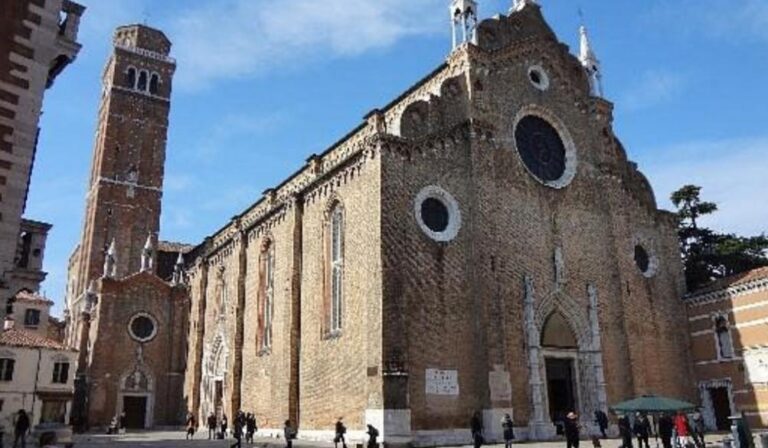
Basilica di Santa Maria Gloriasa dei Frari
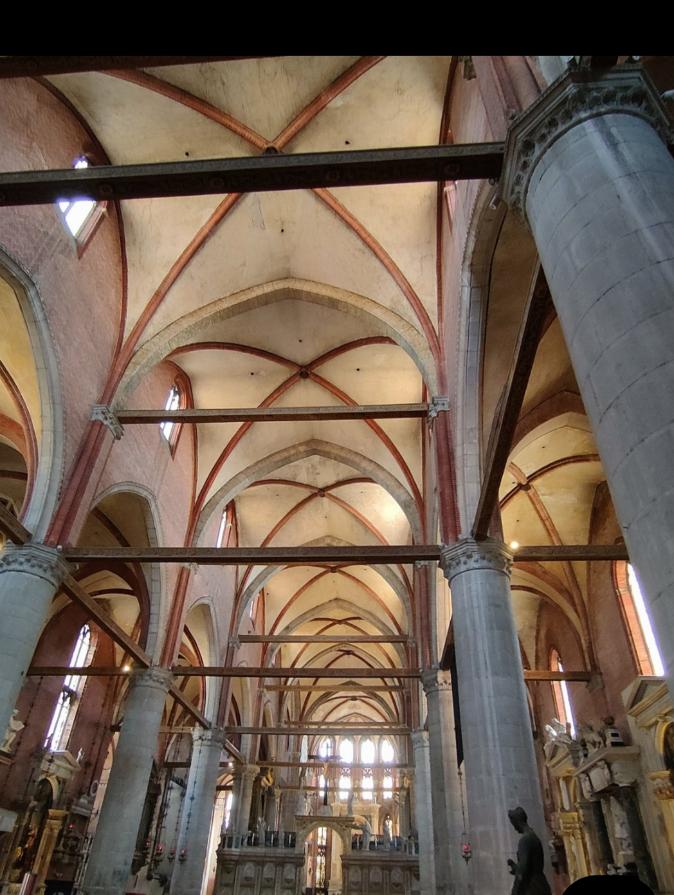
The interior of the Basilica di Santa Maria Gloriasa dei Frari
The interior of the Basilica di Santa Maria Gloriasa dei Frari
Venice, Italy’s Floating City…Cont...
VENICE SAFETY AND SECURITY
The city of Venice is as safe as it gets. There are no worries with gun violence, pickpockets, etc. The streets and transport are safe, day and night. I used the Vaporetto as late as midnight and awaited the bus around the same time with a couple from France, and all were incident-free. It is a city you can walk in ease and without apprehension.
On the glass bridge - Ponte della Costituzione Constitution Bridge)
Some of the links on this blog/website are affiliate links, and if you purchase products or services through these links a commission may or will be paid to the owner of this website. The amount of commission varies from product to product. All commission earned helps in the funding of this blog/website.
As an AmazonAssociate, this site also earns from qualifying purchases.
“Prices will be the same whether you use the affiliate link or not, you will NOT pay more by clicking through said affiliate links. You are guaranteed a 100% safe link in helping to keep this site going”.
Learn how to Save, Plan, and Travel Alone on a Budget
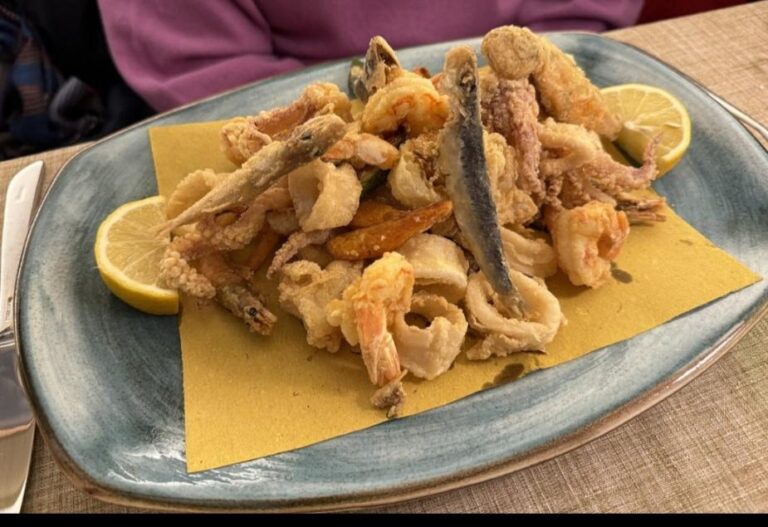
Fritto Misto di Mare (aka – fried mixed seafood) – one of the most popular dishes in Venice. They usually serve it as a platter for two or more.
Venetian Spritz – Venice’s very own low-alcoholic cocktail, and one they are extremely proud to share with visitors.
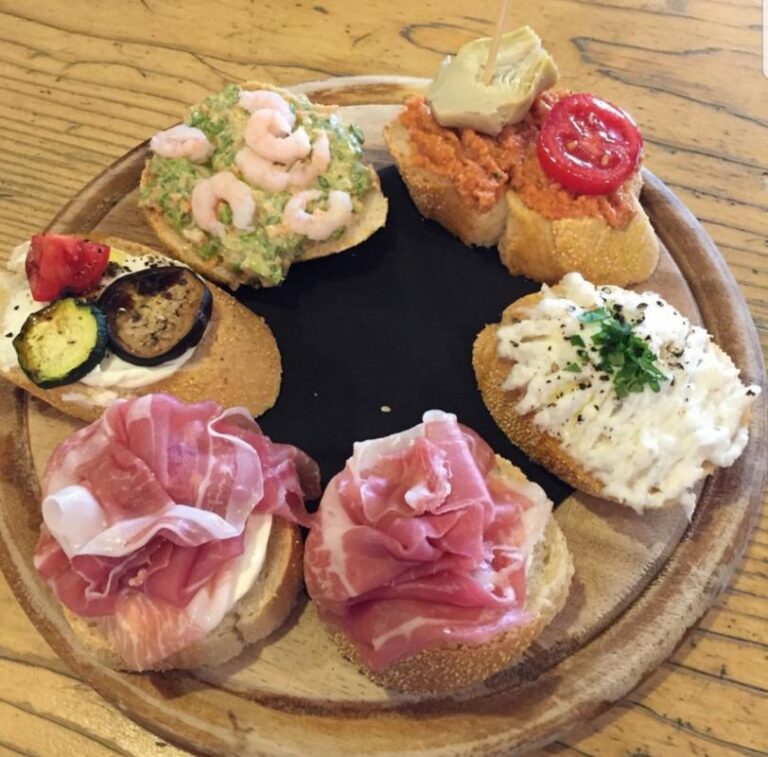
Nibble on Cicchetti – these bite-size morsels are available everywhere in Venice and are the local version of tapas. They range from olives and anchovies to creamy cod or ham and peppers on toast.
Fritole (aka pancakes) – local Venetian-style pancakes studded with raisins, deep-fried, then sprinkled with sugar.
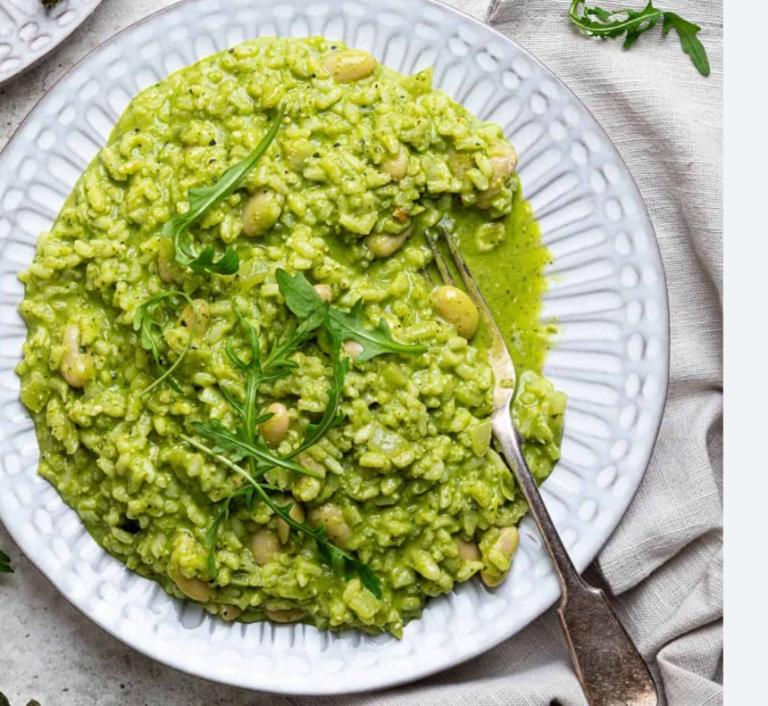
Risi e Bisi – a simple, delicious meal made of rice and spring peas, and is a cross between a thick soup and liquid Risotto.
Cicchetti
Risi e Bisi
Fritto Misto di Mare
2 Pairs Boot and Shoe Covers-Water and Skid Resistant Boot Covers, Reusable Rain Shoe Covers for Men and Women Galoshes, Rain Boots, Over shoes
These sites and structures are not to be missed when visiting Venice. Undoubtedly, they are most popular in Venice, Italy’s floating city.
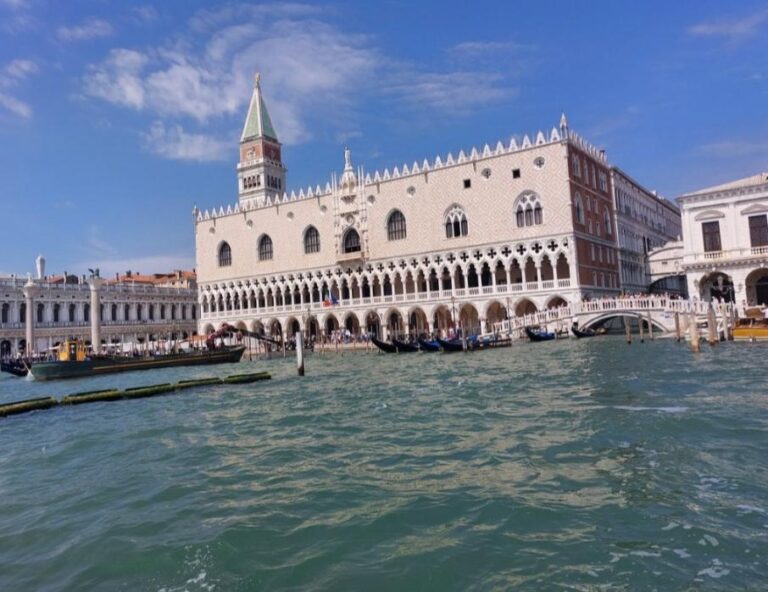
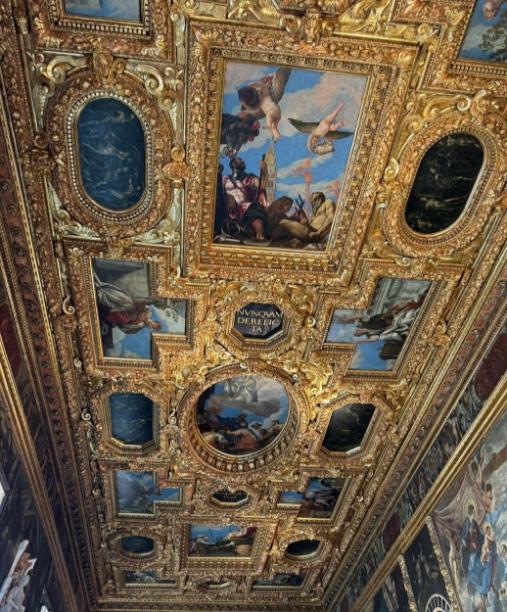
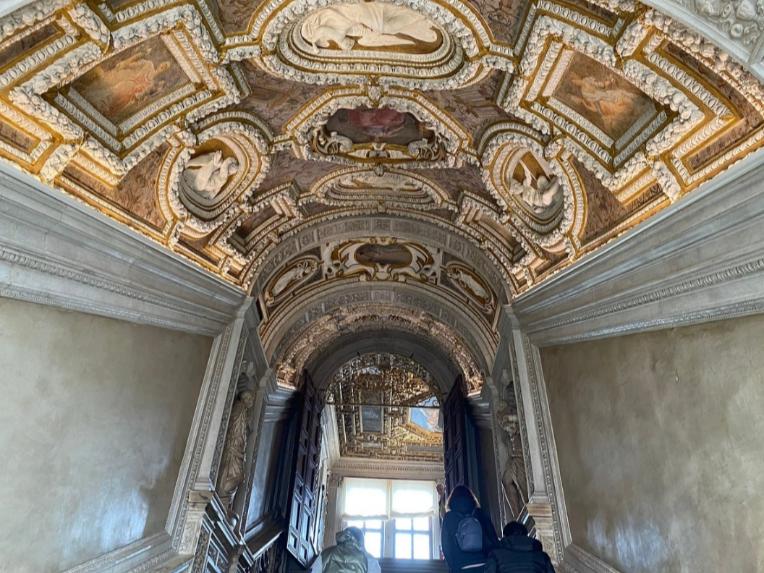
Doge’s Palace (a wonder to behold with its Gothic façade, gilded interior, and ceiling).
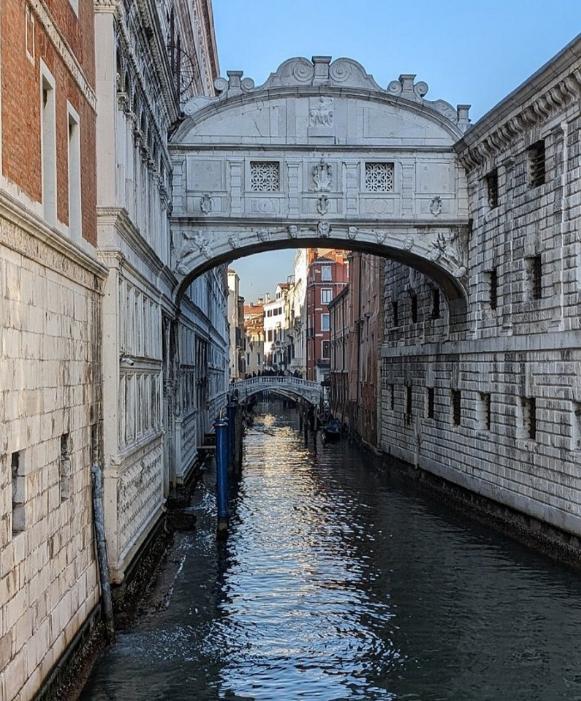
A Gondola ride (it is a must to experience and enjoy a gondola ride, although expensive, or at least the Vaporetto in the canals of Venice. Be sure to get a glimpse of the Bridge of Sighs, famously named because in the 19th century, condemned-to-death men had to cross this bridge and the lagoon for the last time).
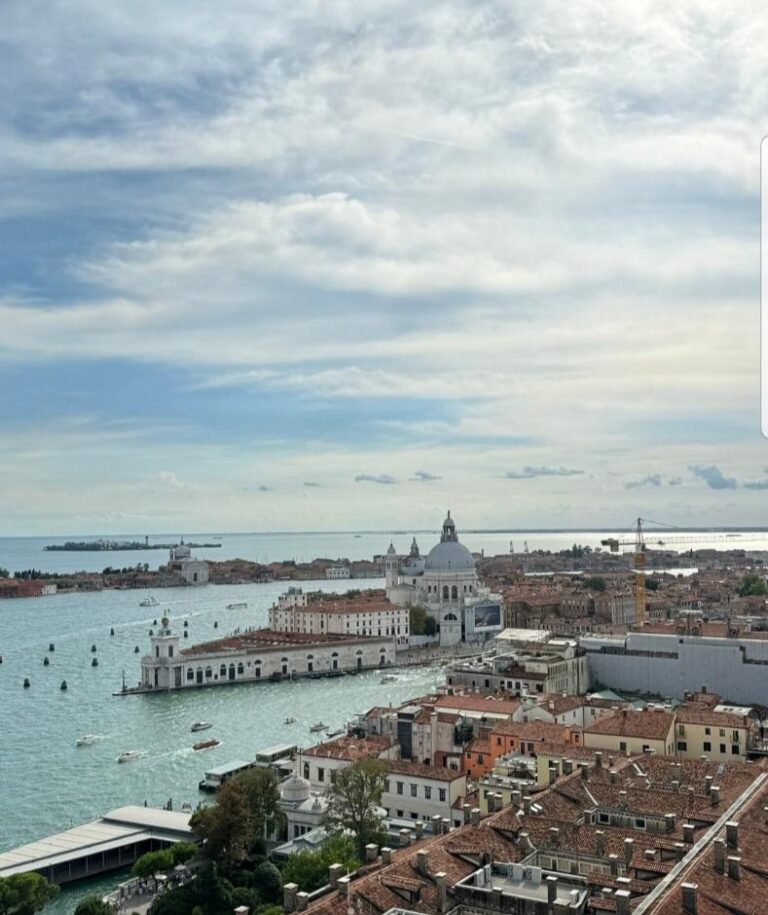
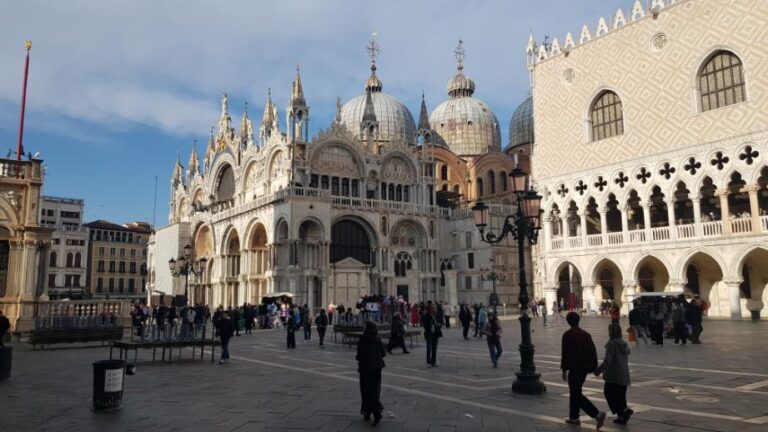
St. Mark’s Square, Campanile, and St. Mark’s Basilica (they are all in the same vicinity on St. Mark’s Square; the cathedral is on this square among the gorgeous buildings and is the most famous and fascinating cathedral. It is a testament to the medieval era when power and money ruled Venice. The Campanile, or the iconic bell tower, offers panoramic views of the city’s architecture and canals).
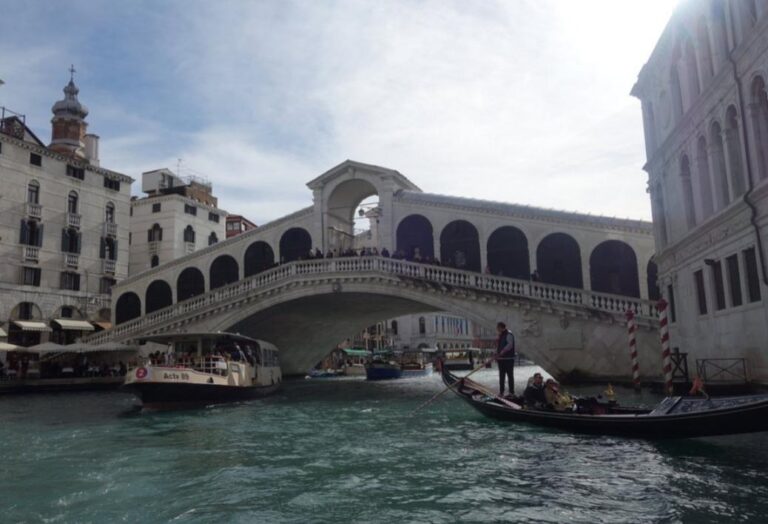
Rialto Bridge (One of the most iconic and oldest bridges in Venice. Additionally, until the 19th century, it was the only way to cross the Grand Canal).
Lido di Venezia (a famous 11-kilometre-long island off the coast of Venice known for its pristine beaches and waters, gorgeous resorts, and a lively atmosphere).
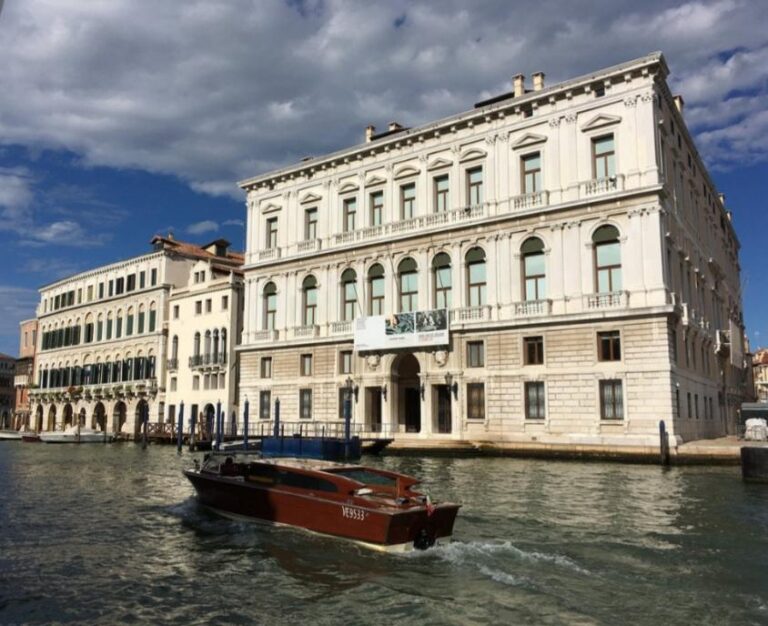
Palazzo Grassi (a historic palace renowned for its splendid architecture and prestigious exhibitions).
At the Campanile di San Marco at Piazza San Marco (Saint Mark's Square)
A view of the city from the Campanile
Basilica di San Marco (San Marco Basilica)
Ponte dei Sospiri aka Bridge of Sighs (historic bridge which connects Doge's Palace with its prisons and was named because of the sighs of prisoners who crossed it to meet their executioner)
The iconic Ponte di Rialto (the oldest of the four bridges over the Grand Canal in Venice)
Dogenpalast (Doge's Palace) from the Grand Canal
The interior of the Doge's Palace
The interior of the Doge's Palace
Palazzo Grassi (Grassi Palace)
Prepare for Blackouts – GOODaaa Power Bank Wireless Charger 45800mAh Built in Hand Crank and 4 Cables 15W Fast Charging Power Bank 7 Outputs & 4 Inputs Solar Portable Charger, SOS/Strobe/Strong Flashlights, Compass
Prepare for Blackouts – Emergency Weather Radio NOAA/AM/FM with 4000mAh Portable Power Bank, USB/Solar/Hand Crank Charging, Flashlight, SOS Alarm, Radios for Outdoor & Indoor Hurricane, Camping Survival Essentials
Venice is a unique and amazing city with picture-perfect scenery. Simply put, it is a photographer’s dream. It boasts impeccable and interesting architecture, bridges, canals, museums, and historical sites. Furthermore, it has an enticing ambience with a romantic atmosphere, and is very captivating even in winter. If you are like me and dislike crowds, then avoid the “peak travel period,” which I assume is during the warm and sunny months. Because, as previously mentioned, Venice has a steady flow of visitors, so all times are peak times. Hence, when I visited at the end of winter, it was filled with visitors but not too crowded. Despite it being expensive and even branded as overrated and crowded by some, it is one of the world’s must-see cities. Therefore, I highly recommend Venice, Italy’s floating city, to all travellers. Happy Travels!
Please use the share buttons below on scroll, if you wish to share anything on this page. The + button offers more share icon options when clicked.